
Most people don’t think twice about the paperwork in their lives. Birth certificates, marriage licenses, and academic transcripts live quietly in drawers, folders, and glove compartments. Until one day, you need to present those documents to someone who doesn’t speak your language, and suddenly, their quiet importance roars to life.
This is where official certified translation comes in, not with noise, not with drama, but with the steady authority of precision. It’s a field that operates behind the scenes, yet it carries the weight of courtrooms, embassies, hospitals, and universities on its back. You won’t notice it until you need it. And when you do? It has to be flawless.
What Is an Official Certified Translation, Really?
Let’s clear the fog around the term. An official certified translation is more than a bilingual rewrite. It’s a precise, faithful reproduction of a document, translated by a qualified professional who then certifies in writing that the translation is accurate and complete. This certification includes a signed statement and a formal declaration of the translator’s accountability.
No room for guesswork. No loose interpretations. Just black-and-white accuracy that can stand up to legal and administrative scrutiny.
It’s the difference between “good enough” and “undeniably valid.”
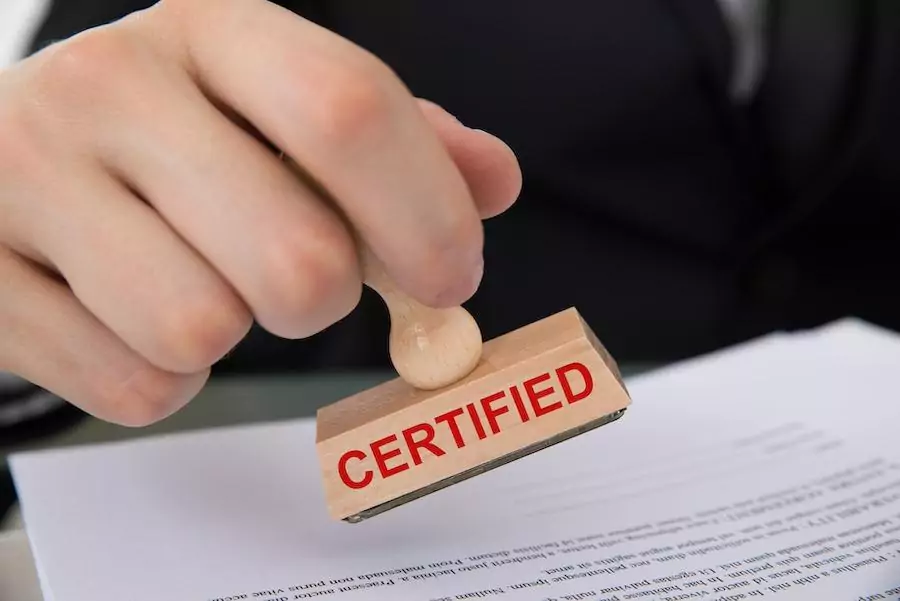
When the Stamp Speaks Louder Than Words
Imagine this: you’ve spent months preparing your immigration paperwork. You’ve compiled birth certificates, marriage documents, and a police clearance certificate from your home country. But when you finally submit everything, your application is delayed, all because the translations weren’t officially certified.
The documents might have been accurate. They might have even been flawless. But without that signed declaration from a qualified translator, they don’t count. Not to the USCIS. Not to the embassy. Not to the university admissions office in a country far from home.
It’s a harsh reality, but a necessary one. Institutions need to trust the content. And that trust is built on certification.
Why Certified Isn’t Optional in High-Stakes Situations
You don’t need a certified translation to order lunch in Paris or send a postcard from Tokyo. But if you’re submitting documents to a government, legal, or academic body? That’s a different story.
Here’s where official certified translations are typically required:
- Immigration and visa applications
- University admissions (especially international credentials)
- Legal proceedings and court filings
- International adoptions
- Business contracts and compliance documentation
- Medical records for international treatment
These are moments that often define a person’s future. A visa denial can unravel a dream. A delay in your academic transcript can postpone a semester abroad. The translation, in these cases, becomes not just a formality, but a bridge.
More Than Words on a Page
You might assume translation is a straightforward business. Word A becomes Word B. But human language isn’t that simple. Names carry cultural weight. Phrases carry implications.
Documents carry formats, stamps, annotations, and even abbreviations that lose all meaning when literally translated.
An experienced translator knows this. They’ve seen the subtle differences between similar documents from different countries. They’ve navigated regional dialects, archaic terminology, and bureaucratic shorthand that would baffle the average bilingual speaker.
That’s why certified translations are handled by professionals. This is not because others aren’t capable of speaking two languages, but because official documents require more than translation. They require interpretation within the strict boundaries of form and function.
The Emotional Layer Most People Miss
Behind every certified translation is a human story. A couple trying to build a life together across borders. A student hoping to make a home in a foreign city. A family seeking medical care for a loved one overseas. A retiree is moving to a warmer country to enjoy their final chapter.
These aren’t just documents. They’re chapters of a life that now need to be understood and respected in another language.
There’s something deeply personal about sending off a document you’ve kept tucked away for years, trusting someone to carry its meaning to another place. It’s not glamorous. It’s not loud. But it matters. An official certified translation holds that trust with quiet dignity.
Certified vs. Notarized: The Confusion Demystified
It’s one of the most common mix-ups in the field: Is a notarized translation the same as a certified one? Short answer: no.
A certified translation is completed by a professional translator who signs a statement verifying the document’s accuracy. A notarized translation, on the other hand, involves a notary public witnessing that signature. The notary doesn’t verify the translation itself; only the translator signed the certificate.
Some institutions require both. Others only ask for certification. Knowing the difference can save you time, frustration, and, in some cases, missed deadlines.
The Cost of Getting It Wrong
Let’s talk consequences. Submitting an uncertified or improperly translated document can result in:
- Rejection of immigration applications
- Delays in court proceedings
- Academic deferrals
- Contractual disputes
- Loss of job or housing opportunities
And here’s the worst part: the person reviewing your documents likely won’t give you detailed feedback. You may just get a notice saying “Incomplete” or “Translation not accepted.” That vague rejection? It’s enough to unravel months of planning.
When every detail matters, cutting corners isn’t just risky, it’s expensive.
Trust Is Earned, Not Assumed
Certification gives your documents legitimacy. But the trust behind it is what truly holds weight. That’s why choosing the right translator or agency isn’t just about credentials, it’s about reliability.
Ask yourself:
- Have they worked with institutions like the one I’m applying to?
- Do they understand formatting standards for official documents?
- Are they experienced with the type of translation I need?
This isn’t the time to gamble. It’s time to lean on expertise.
A World in Motion Needs Clear Translation
The world is more connected than ever, yet the systems we navigate remain deeply local. Each country, each agency, and each legal body operates with its own expectations. That’s why official certified translation isn’t going anywhere. In fact, it’s becoming even more essential as global mobility increases.
Digital certifications, secure document sharing, and remote verification processes are reshaping how translation services are delivered. But at the heart of it all remains the human role of the translator who carries your meaning across the gap and stamps it with confidence.
Conclusion
In a world that runs on documents stamped, signed, scanned, and submitted, accuracy is only part of the equation. The real power of official certified translation lies in its ability to quietly carry the most important parts of our lives across language barriers.
It’s not glamorous. It doesn’t shout. But it matters more than most people realize.
And few understand that better than the team at Connected Translation, where every document is treated not just as paperwork, but as a person’s story, waiting to be told in another tongue.