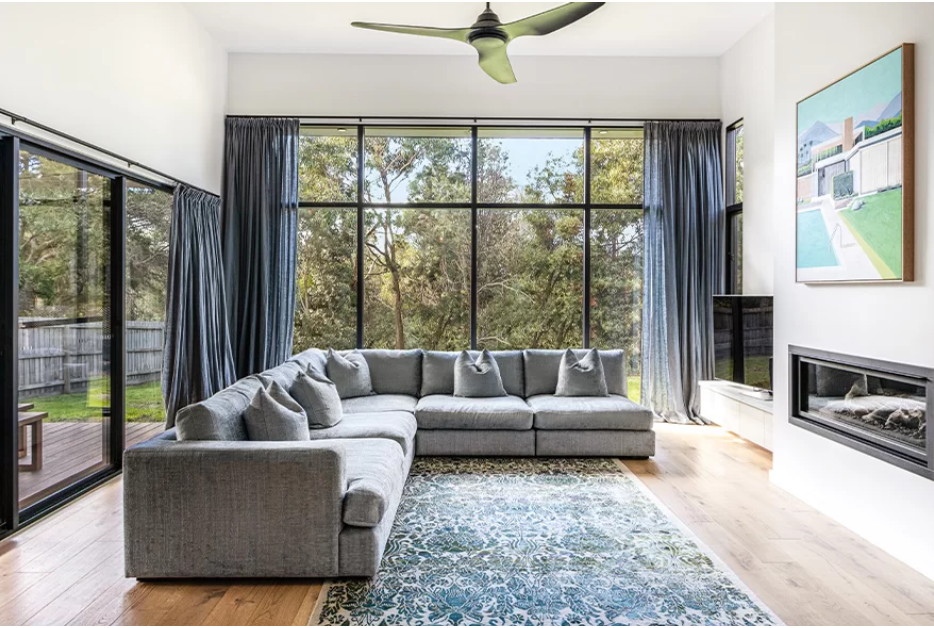

Stand in any double-glazed showroom across Sydney or Adelaide and ask a sales consultant which window type performs best thermally — they will almost certainly point you toward an operable casement or awning unit. What they rarely mention is that windows, by their very nature, outperform every operable equivalent on thermal sealing without even trying. There are no moving parts to degrade, no compression seals that flatten over seasons, and no mechanical gaps that widen as frames age. Fixed windows are the quiet achievers of the glazing world, and most homeowners only discover this after choosing something else first.
Why Operable Windows Leak
The physics here are worth understanding properly. Every operable window relies on a compression seal — a rubber or foam gasket that gets squeezed between the moving sash and the fixed frame when the window closes. That seal does its job reasonably well when new. After several years of thermal cycling, UV exposure, and repeated compression, it hardens, flattens, and begins allowing air movement. Windows have no compression seal because they need none. The glazing is bedded directly into the frame with structural silicone or gasket systems that do not degrade through use, because there is no use to degrade them.
The Acoustic Gap Nobody Mentions
Acoustic consultants working on residential projects near busy roads or flight paths consistently specify windows for the most noise-sensitive rooms. The reason is not simply the glass specification — it is the elimination of the mechanical interface. Even a well-fitted casement window has a meeting point between moving sash and frame that transmits vibration. Fixed glazing removes that pathway entirely. In rooms where this has been applied, the noise reduction goes beyond what the glass specification alone would predict, because the entire assembly behaves as a single rigid unit rather than a frame containing a moving component.
What They Do to a View
There is a technical measurement called the “daylight opening” — the actual unobstructed glass area within a window frame. For operable windows, this figure is always compromised by the hardware, the sash thickness, and the structural requirements of a frame that must support movement. Fixed windows return the maximum possible daylight opening for any given rough opening size. In coastal properties or bush-facing living rooms, this difference is visible and significant. A fixed glazed panel in the same wall opening delivers a noticeably wider, taller, and more immersive connection to the view outside — not marginally, but enough to change how a room feels to sit in.
Performance Under Wind Load
Building engineers specify windows to meet wind load ratings based on the location and height of the installation. Operable windows resist wind pressure through their locking hardware — a mechanism that transfers load through relatively small contact points on the frame. When that hardware fatigues or misaligns, the rating effectively drops. Windows transfer wind load through the entire perimeter of the glazing unit directly into the surrounding frame and wall structure. It is a fundamentally more stable load path, which is why cyclone-rated construction in northern Australia uses fixed glazing wherever ventilation requirements permit.
The Maintenance Maths
Builders who work on investment properties have a straightforward view on this. Every operable window is a maintenance event waiting to happen — a handle that stiffens, a hinge that corrodes, a lock that stops engaging cleanly. Multiply that across an entire property over a decade and the accumulated maintenance is substantial. Windows remove that calculation entirely. The only variable is the glazing seal, which on a quality installation carries a lifespan measured in decades rather than years. For landlords, holiday property owners, and anyone who simply wants fewer things to manage, this is a practical argument that holds up clearly over time.
Conclusion
Fixed windows earn their place in well-designed homes not through novelty but through engineering logic that holds up under scrutiny. The absence of moving parts is not a limitation — it is the source of their thermal, acoustic, structural, and maintenance advantages simultaneously. Homeowners who plan glazing layouts with windows positioned deliberately, rather than defaulting to operable units everywhere, consistently end up with homes that perform better and demand less. Sometimes the most considered decision is simply knowing when not to add complexity.