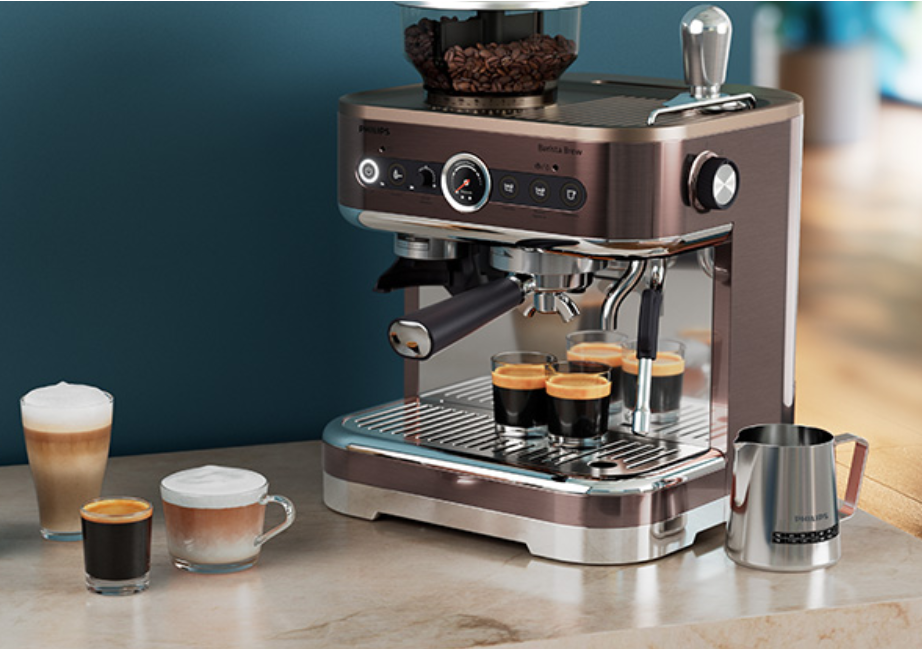

Somewhere between the glossy product photo and the checkout button, most buyers stop asking the questions that actually matter. They get absorbed in aesthetics, brand recognition, and review scores — none of which reliably predict whether a machine will suit the way they actually make coffee. Browsing any coffee machine for sale without knowing what to interrogate is how people end up with expensive equipment that half works or works brilliantly for someone else’s routine but not their own.
The Portafilter Basket Nobody Mentions
Almost every entry-level and mid-range espresso machine ships with a pressurised portafilter basket. This is a dual-wall design with a pinhole at the base that restricts flow artificially, meaning the machine can produce something resembling espresso even with coarsely ground, stale coffee. Retailers rarely lead with this because it makes the machine sound forgiving — and it is, which is the problem. Buyers who do not know this exists never discover what the machine is actually capable of. Swapping to a single-wall, non-pressurised basket is the most revealing upgrade available, and it costs almost nothing. What it exposes, though, is that the grinder now matters enormously.
Warm-Up Time Is a Lifestyle Question
Thermal mass is one of the more underrated variables in espresso machine selection. Machines with heavy brass group heads and large boilers take considerably longer to reach stable brewing temperature — sometimes the better part of half an hour. For someone who makes coffee at a leisurely weekend pace, that is irrelevant. For someone who needs a shot pulled and done within ten minutes of waking up on a workday, it is disqualifying. The machines that heat quickly tend to use thermocoil systems, which reach temperature fast but are more sensitive to ambient fluctuations. Neither approach is superior — they suit different users, and the question rarely appears in buying guides.
Reviews Cluster Around the Wrong Variables
When browsing any coffee machine for sale, the review section tends to fill with opinions on aesthetics, ease of setup, and how the machine performs on day one. Long-term reliability, the behaviour of the steam wand after six months of milk residue buildup, and how the group head seal holds up under daily use are the variables that determine whether ownership remains enjoyable — and these take time to surface. The most useful reviews are typically buried, dated, and written by people who have owned the machine long enough to have something go wrong. Sorting by oldest rather than most helpful is worth doing before any serious purchase.
The Water Factor Most Buyers Overlook
Hard water is the quiet enemy of espresso equipment, and it operates invisibly until it does not. Scale accumulates inside boilers and heat exchangers, narrowing the internal pathways and forcing components to work harder to maintain temperature. The first sign is usually subtle — shots pulling slightly faster, temperature feeling slightly off — before the damage becomes undeniable. A good coffee machine bought without any consideration for water filtration or a regular descaling schedule will degrade faster than an identical machine owned by someone who treats water quality as part of the maintenance routine from day one.
What Resale Patterns Actually Signal
The secondhand market for espresso equipment is more informative than most buyers realise. Machines that flood resale platforms after short ownership periods — particularly those listed as “barely used” or “upgrading” — are worth investigating before purchasing new. Sometimes the reason is genuinely an upgrade to better equipment. More often, it signals that the machine underdelivered against expectations in some consistent way that does not appear in the official reviews but shows up persistently in the pattern of who is selling it and why.
Conclusion
Cutting through the marketing around any coffee machine for sale requires asking questions the listing was not designed to answer. Basket type, warm-up behaviour, water compatibility, and what the resale pattern looks like are the details that separate a machine suited to the buyer’s actual life from one suited to a product photographer’s bench. Getting those answers before purchasing — rather than discovering them through ownership — is the difference between a machine that earns its place in the kitchen and one that quietly gets listed for sale within the year.