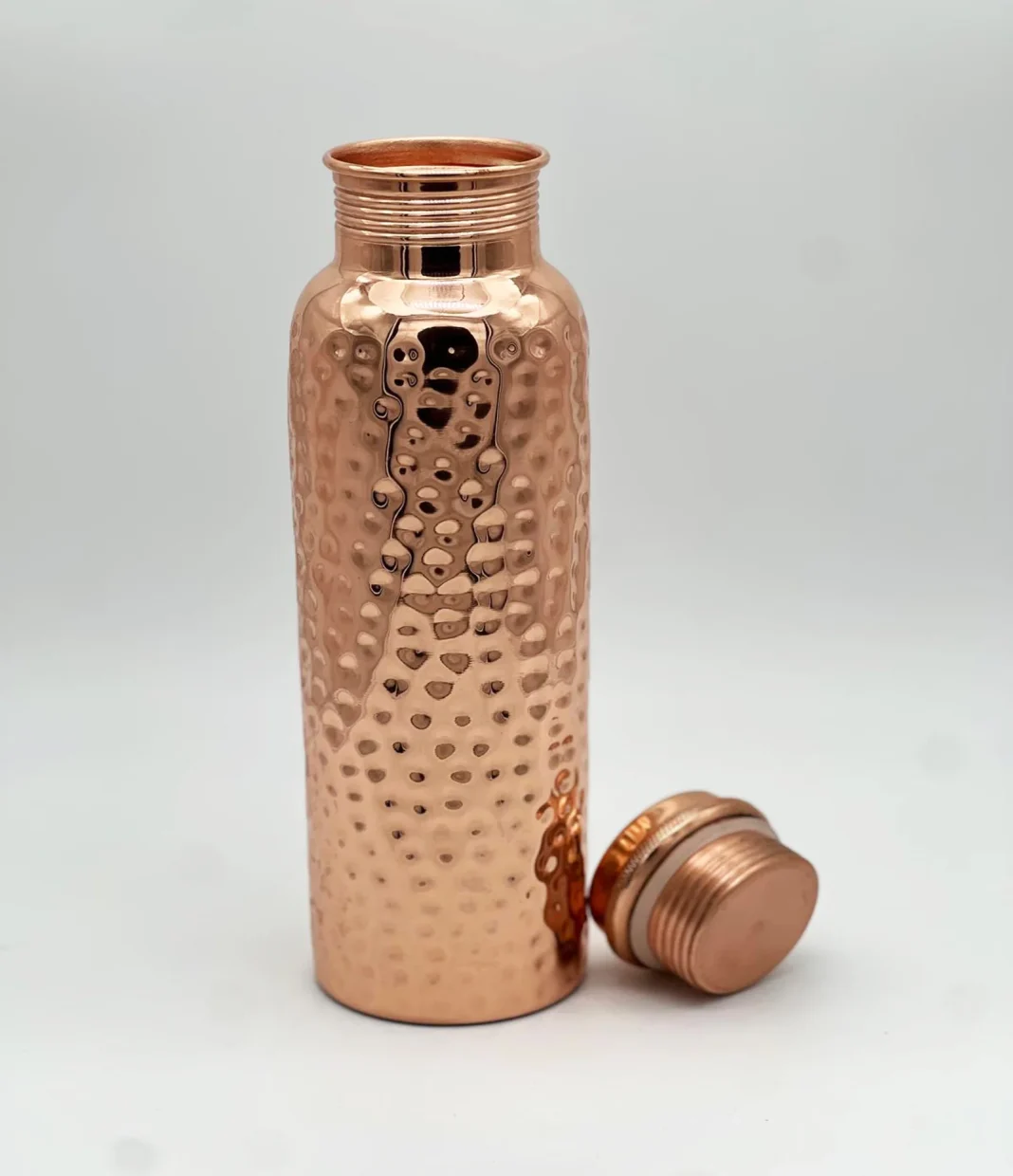

There is a particular kind of satisfaction that comes from discovering that something ancient people did intuitively was, in fact, exactly right. Not based on luck or superstition, but on a deep observational understanding of the human body that accumulated over generations. That is the story of the Ayurvedic copper water bottle practice — a tradition so old it predates most modern civilisations, and yet one that modern science is now actively validating with rigorous research.
If you have ever wondered why Ayurveda placed such enormous importance on copper, this article will give you the full picture.
What Ayurveda Actually Said About Copper
Ayurveda is one of the world’s oldest systems of medicine, originating in the Indian subcontinent over 5,000 years ago. Its foundational texts — the Charaka Samhita and the Sushruta Samhita, contain detailed recommendations about health, diet, and daily routines. Among these recommendations is a remarkably specific practice concerning an Ayurvedic copper water bottle.
The texts advised storing water overnight in a pure copper vessel — known as a Tamra Patra — and drinking this Tamra Jal, or copper water, first thing each morning on an empty stomach. The reasons given were numerous. Ayurvedic practitioners believed that copper water purified the water itself, aided digestion, reduced excess Pitta (the bodily humour associated with inflammation and heat), supported the liver and spleen, and promoted overall vitality and longevity.
What is striking about these claims is not just that they were made, but that they were made so specifically and so consistently across thousands of years and across different schools of Ayurvedic thought. When a practice survives for five millennia in a rigorous medical tradition, it is usually because the practitioners could observe, generation after generation, that it worked.
The Science That Caught Up
For most of recorded history, the mechanisms behind the Ayurvedic copper water bottle practice were unknown even to those who practised it. They knew it worked — they could see the results in their patients — but they did not have the scientific tools to explain why. That changed in the late 19th and early 20th centuries with the study of what became known as the oligodynamic effect.
The oligodynamic effect refers to the ability of certain metal ions to destroy microorganisms at very low concentrations. Copper, researchers discovered, is one of the most powerful metals in this regard. When water is stored in a copper vessel, copper ions dissolve into the water at trace concentrations. These ions interfere with the cellular processes of bacteria, viruses, and fungi, causing them to die. Studies have found that copper effectively destroys E. coli, Salmonella, and a range of other harmful pathogens that are responsible for some of the most common waterborne illnesses in the world.
What Ayurvedic practitioners described as purification was, in fact, microbial sterilisation — achieved through natural chemistry rather than boiling, filtration, or chemical treatment. They were right. They just did not have the vocabulary to describe why.
The Dosha Balance Explained
Ayurveda describes health as a state of balance among three fundamental energies in the body — Vata, Pitta, and Kapha. Each person has a unique constitution, and illness is understood as an imbalance among these three forces. An Ayurvedic copper water bottle was specifically recommended because copper was considered tridoshic — meaning it supports the balance of all three doshas simultaneously, which is rare in Ayurvedic medicine.
Modern physiology gives us a different but compatible framework for understanding this. Copper is an essential trace mineral involved in dozens of biochemical processes in the human body. It supports immune function, neurological health, collagen synthesis, iron metabolism, thyroid function, and antioxidant defence. When the body has adequate copper, a wide range of systems function more smoothly. When it is deficient, multiple systems can be affected at once. The Ayurvedic concept of tridoshic balance maps closely onto this understanding of copper as a systemic supporter of human health.
The Morning Ritual and Why Timing Matters
One of the most specific recommendations in Ayurvedic copper water bottle practice is the timing — drink it in the morning on an empty stomach. From a scientific perspective, this makes sense for several reasons. The digestive system is most receptive and active in the early morning hours. Drinking copper water before food means the copper ions are absorbed more efficiently and the antibacterial effects act on an empty gut rather than competing with food for absorption.
Ayurvedic texts also recommended this timing because the morning represents a moment of transition in the body’s daily cycle — a window when new inputs have the most influence on the day’s physical and mental state. Whether you frame this through the lens of Ayurveda or modern circadian biology, the conclusion is the same: morning is the right time to drink your copper water.
What This Means for You Today
Understanding the Ayurvedic roots of the copper water bottle practice is not just a historical exercise. It is a reminder that some of the most effective health tools available to us are not new — they have simply been waiting for science to catch up. You do not need to adopt a full Ayurvedic lifestyle to benefit from this one practice. You just need a genuine Ayurvedic copper water bottle made from 100% pure unlined copper, a habit of filling it at night, and the consistency to drink from it each morning. Five thousand years of practitioners observed the results and kept recommending it. Now the scientists are looking at the data and coming to the same conclusions. That kind of convergence between ancient wisdom and modern evidence is rare. When it happens, it is worth paying attention.



