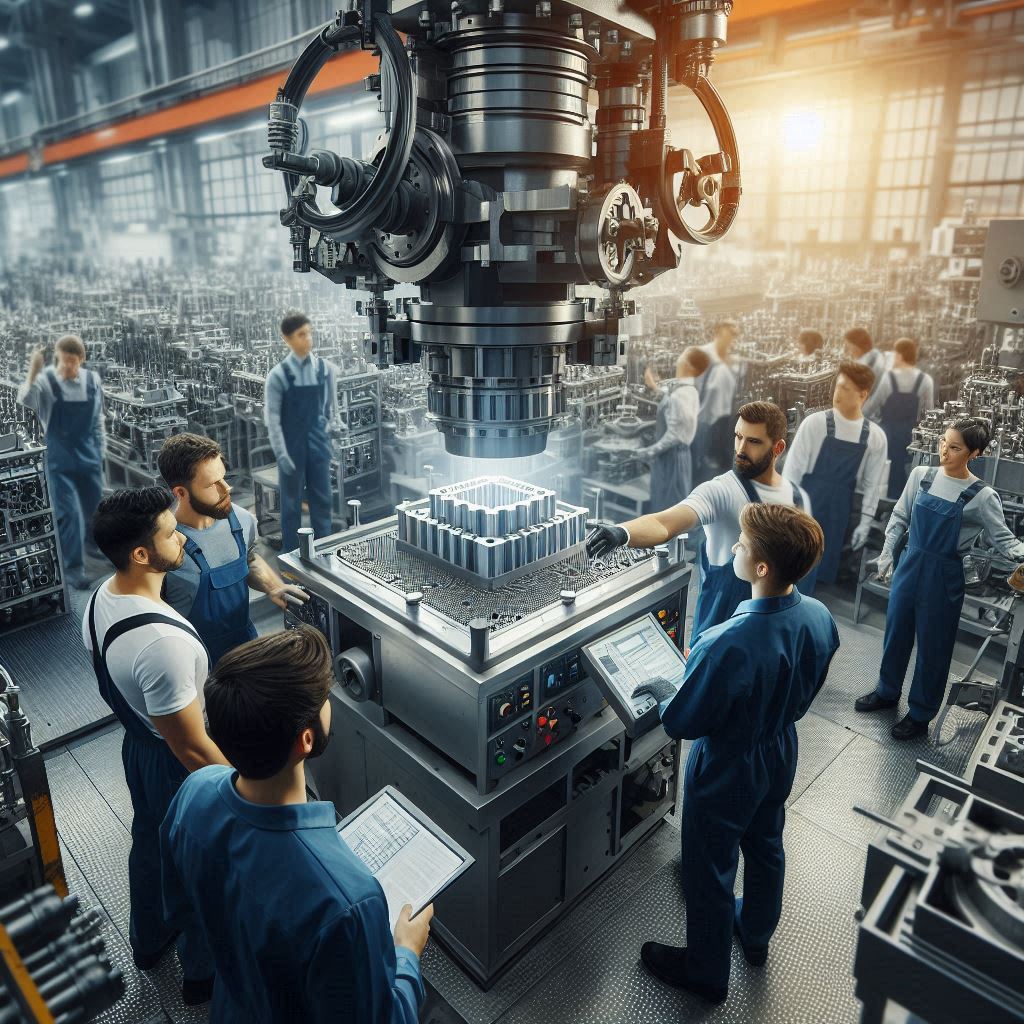

While investment casting delivers excellent near-net-shape components with fine detail and surface finish, machining takes these parts to the next level by refining critical dimensions and achieving exact tolerances. Once the component is cast, CNC machining is applied to areas that require high precision—such as sealing surfaces, threaded holes, or tight-fitting joints. This combination ensures both structural integrity and dimensional accuracy, making machined investment castings ideal for demanding applications in aerospace, automotive, medical, and industrial sectors. By enhancing key features post-casting, manufacturers can deliver parts that meet strict engineering requirements without compromising on performance or cost-efficiency.
The Step-by-Step Process of Machined Investment Casting Explained
Machined investment casting is a multi-stage process that combines the advantages of precision casting with the accuracy of CNC machining. It begins with the creation of a wax pattern, which is coated in ceramic to form a mold. After the wax is melted out, molten metal is poured into the mold to create the cast component. Once solidified and cleaned, the part undergoes heat treatment (if required) to enhance mechanical properties. The final step is CNC machining, where critical surfaces are milled, drilled, or turned to achieve tight tolerances and precise geometries. This hybrid approach ensures that the final product meets both complex design specifications and functional performance standards, making it ideal for high-precision industries.
Top Industrial Applications of Machined Investment Castings
Machined investment castings are widely used across industries that demand high precision, durability, and reliability. In the aerospace sector, they are essential for producing turbine blades, structural brackets, and engine components where tight tolerances and strength-to-weight ratios are critical. In the automotive industry, these castings are used for gearbox housings, suspension parts, and exhaust components. The oil & gas and energy sectors rely on them for valves, pump bodies, and drilling equipment that must withstand extreme pressure and corrosion. Additionally, medical and defense industries utilize machined investment castings for intricate, high-performance parts where consistency and quality are non-negotiable. Their ability to deliver complex shapes with high precision makes them indispensable in advanced manufacturing.