
In a world where buildings are no longer just brick and mortar but active, intelligent systems, the old security playbook is starting to fall apart. Legacy firewalls and VPNs weren’t designed to protect a commercial building’s access control system talking to the cloud, or HVAC data streamed to a dashboard halfway across the world. The perimeter has shifted, if not disappeared entirely.
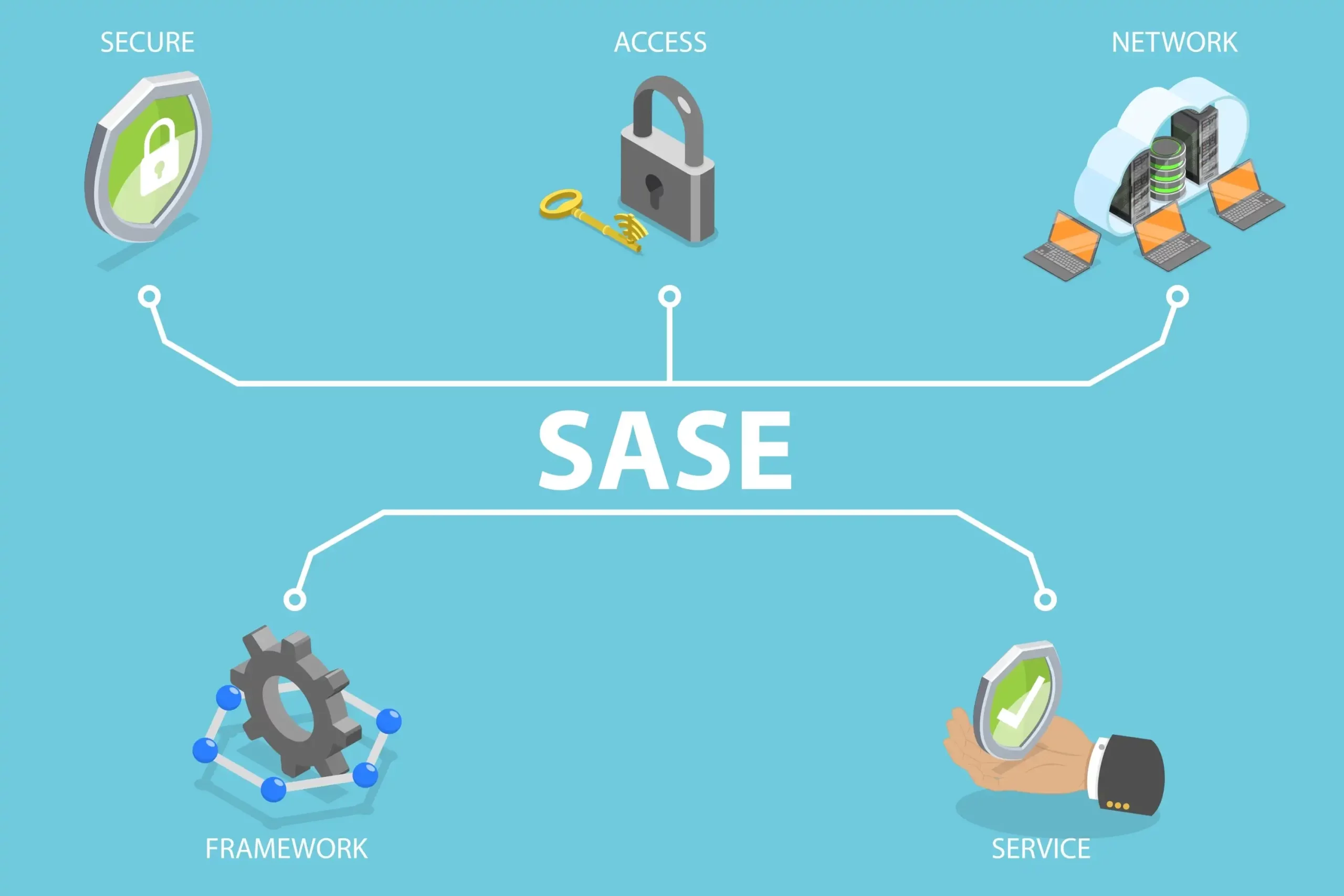
That’s where Secure Access Service Edge (SASE) comes in. More than just a buzzword, SASE is becoming the framework that modern smart infrastructure needs. It’s not about adding another layer, it’s about replacing the outdated concept of “edge security” with something more adaptive, dynamic, and cloud-native.
Here’s how SASE is flipping the script on how we think about security in the age of smart buildings and connected operational technology (OT).
The Old Perimeter Doesn’t Work Anymore
Not long ago, the network perimeter was clear-cut. You protected the office. You protected the server room. Everyone inside was “safe,” and threats came from the outside. Then came cloud platforms, mobile workforces, edge devices, and third-party vendors that need access to building systems from anywhere.
Now? There is no fixed perimeter. Once air-gapped systems are accessible via APIs. Contractors work from home but need access to BAS dashboards. Tenants bring their own devices, applications, and expectations of always-on services. All of this puts enormous pressure on traditional firewall-based security models.
The result is a patchwork of VPN tunnels, access rules, and third-party bolt-ons—none designed to handle this kind of distributed, always-connected environment. That’s exactly why SASE is gaining traction.
What is SASE, Really?
Secure Access Service Edge, or SASE (pronounced “sassy”), is not a product. It’s an architectural shift. It combines network security functions (like secure web gateways, firewalls, and zero-trust access) with wide area network (WAN) capabilities, delivered as a unified, cloud-based service.
SASE’s goal is simple: securely connect any user, on any device, to any service, anywhere.
But, it gets interesting for the smart infrastructure world is how it can be adapted to operational systems—legacy building technology, control systems, energy dashboards, OT devices, and all the systems traditionally sat outside IT purview.
Zero Trust for OT Systems? Absolutely.
Zero Trust is a core tenet of Secure Access Service Edge (SASE)—and it fits perfectly with the challenges of securing cyber-physical systems.
In smart infrastructure, you might have dozens of systems: HVAC controllers, BMS servers, security cameras, elevator systems, and lighting panels. Most of these run on outdated OS versions, many without native encryption, and most still rely on flat networks for communication.
Zero Trust says: never trust, always verify. That means no blanket network access. No, assuming internal systems are safe. Every user, device, or service must always prove its identity and permissions.
For building operators, this means you can:
- Restrict access to building systems based on user roles and context (e.g., time of day, location)
- Monitor every connection attempt and session for anomalies
- Instantly revoke access or isolate a device that’s behaving suspiciously
The best part? It doesn’t require ripping and replacing legacy systems. The right SASE solution, especially one designed with OT in mind, sits above your existing infrastructure and enforces security without breaking functionality.
Enabling Secure Remote Access for CPS Without the Bloat
Remote access has long been a security blind spot in building management. VPNs are clunky, hard to manage, and not built for fine-grained control. Worse, they often expose too much of the internal network, leaving buildings vulnerable to lateral attacks if a user’s device is compromised.
SASE solves this by enabling identity-based, policy-driven access that doesn’t expose internal IP addresses or open wide network tunnels. Whether it’s a facility manager logging in from a laptop or an AI application pulling energy data in real-time, SASE ensures that:
- Only authorized users/applications can access a specific resource
- Connections are encrypted and audited
- Access rules adapt in real time based on risk level or behavior
In short, remote access becomes smarter, leaner, and far more secure, without IT needing to babysit every connection.
A Foundation for Smart Infrastructure at Scale
Smart buildings don’t operate in isolation. Most portfolios span multiple sites, sometimes across cities or even continents. You can’t protect them all using traditional hardware or site-specific security controls.
SASE offers a centralized way to enforce policy, monitor activity, and adapt to threats across all locations, a Class-A office tower in Chicago or a logistics warehouse in Dallas.
And as buildings become more intelligent, integrating AI workflows, automating diagnostics, connecting to marketplaces of third-party apps, the ability to manage and secure these integrations through a single, cloud-delivered security fabric is invaluable.
Why SASE Fits the Edge-Cloud OT World Perfectly
Building infrastructure is undergoing the same transformation that enterprise IT did a decade ago: moving from siloed, on-premise systems to a hybrid edge-cloud architecture. With this shift comes complexity and an opportunity to build smarter from the ground up.
SASE aligns perfectly with this direction because:
- It’s cloud-native and edge-capable
- It supports micro-segmentation of traffic, ideal for diverse OT systems
- It enables observability, telemetry, and forensic insight across distributed networks
- It’s built for continuous change, exactly what smart infrastructure needs
Platforms like Neeve are already operationalizing this idea, directly embedding zero-trust secure edge capabilities into the infrastructure layer. That means you don’t need to bolt on security later—it’s baked into the architecture from the beginning.
The Bottom Line
SASE isn’t just another acronym in the cybersecurity playbook. It’s a rethinking of how access, identity, and control should work in an era where buildings are as connected as they are physical.
For owners, operators, and engineers leading smart infrastructure projects, adopting a Secure Access Service Edge (SASE) architecture isn’t about chasing trends. It’s about building security that matches modern operations’ scale, pace, and complexity.
Because if your perimeter is everywhere, your protection needs to be too. Get your protection by becoming a partner with Neeve.