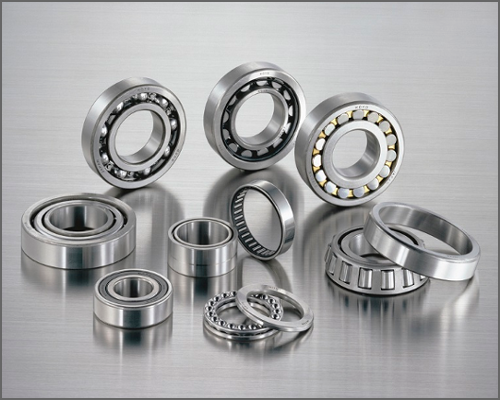

Bearings don’t get much attention, but they’re everywhere. Your car has dozens of them. Factory machines depend on them. These small parts do big work, and picking the wrong type can cost you thousands in downtime and repairs. Among the most widely used are tapered roller bearings, known for taking care of axial and radial loads efficiently
Anti-friction bearings changed manufacturing forever. Before them, machines wore out fast because metal scraped against metal. Now, rolling elements sit between moving parts, cutting friction by up to 90%. That means machines run cooler, last longer, and need less maintenance.
Ball Bearings Handle Speed
Ball bearings use steel or ceramic spheres sandwiched between two rings. The balls roll instead of slide, which cuts down resistance. You’ll see these in electric motors, hard drives, and skateboard wheels.
Speed is their strong suit. A quality ball bearing can spin at 20,000 RPM without breaking a sweat. The contact point between ball and ring is tiny, so there’s minimal friction. But that same small contact area means they can’t handle massive loads like some other types.
Deep groove ball bearings are standard in most applications. They’re cheap, reliable, and work well enough for everyday use. Angular contact versions get paired up for precision work – machine shops use them in spindles where even a micron of play ruins the part you’re making.
Single-row bearings work for basic jobs. Need more capacity? Double-row versions stack two sets of balls for nearly twice the load rating in the same space. Tapered roller bearing Manufacturers also make sealed versions that keep grease in and dirt out, perfect for applications where you can’t stop to service them regularly.
Roller Bearings Carry Heavy Loads
When weight becomes serious, roller bearings take over. Instead of balls, these use cylinders, cones, or barrels. More surface area touching means they distribute loads better. Construction equipment, train wheels, and industrial gearboxes rely on them.
Cylindrical rollers look like tiny pipes. They’re great for radial loads – forces pushing perpendicular to the shaft. Some designs let you pull the rings apart, which makes installation easier when you’re working with a shaft that doesn’t have an open end. Manufacturing plants love these because swapping them during maintenance takes half the time.
Tapered roller bearings use cone-shaped rollers. This design handles both radial and thrust loads simultaneously. Every car and truck on the road uses them in the wheel hubs. They take the vehicle’s weight plus the sideways forces from turning corners. Proper installation requires setting the preload correctly – too loose and they wear fast, too tight and they overheat.
Spherical roller bearings solve alignment problems. The outer ring’s inner surface curves, letting the bearing adjust when shafts bend or housings shift. Mining equipment deals with constant vibration and misalignment, so these bearings prevent premature failure. They cost more upfront but pay for themselves by running longer in harsh conditions.
Needle Bearings Fit Tight Spaces
Needle roller bearings pack lots of capacity into small diameters. The rollers are long and thin – typically four times longer than their width. This lets them fit where regular bearings won’t.
Automotive transmissions stuff these into connecting rods and planetary gear sets. Space is expensive in a transmission case, and needle bearings deliver strength without bulk. Piston pin connections use them too. The engine hammers on these bearings millions of times, yet good ones last the vehicle’s lifetime.
Thrust Bearings Push Back
Most bearings handle loads pushing from the side. Thrust bearings manage forces along the shaft’s axis instead. Marine propellers need these because water pushes back against the spinning blades. Vertical pumps use them to support the impeller and motor weight.
Ball thrust bearings work for lighter loads and higher speeds. Roller thrust versions handle serious axial forces – some industrial models support hundreds of tons. The trade-off is bulk. Thrust bearings take up more space than radial types with similar capacity.
Picking the Right One
Getting Tapered roller bearing selection wrong wastes money. Here’s what matters:
- Load magnitude comes first. Measure or calculate the actual forces. Then check bearing load ratings in manufacturer catalogs. You want at least 30% safety margin for most applications. Critical equipment needs more – sometimes double the calculated load.
- Speed limits vary by type. Balls spin faster than rollers. Smaller bearings run faster than large ones. Temperature affects this too. A bearing rated for 15,000 RPM at room temperature might only handle 10,000 RPM at 150°C. Check the manufacturer’s speed charts against your operating conditions.
- Environment kills bearings fast if you ignore it. Dust requires seals. Moisture needs corrosion-resistant materials. Extreme cold makes steel brittle. Heat above 120°C demands special greases or even no lubrication at all in some exotic designs.
- Precision matters in machine tools, medical equipment, and aerospace. ABEC ratings tell you how accurately the bearing was made.
- Budget tempts people toward cheap bearings. Sometimes that works. Often it doesn’t. We have seen cheap bearings fail in weeks while costly ones run for years. Do the calculations properly on replacement costs, downtime, and labour before you buy it.
Real Applications
Theory’s helpful seeing how it works that’s what makes it click. Warehouse conveyor systems often have cylindrical roller bearings for drive rollers and ball bearings for idle rollers. Drive side handles heavier load idle rollers just need be free spinning as you know
Wind turbines present brutal conditions. The main shaft bearing supports the entire rotor weight – sometimes 100 tons or more – while handling variable wind loads and temperature swings from -40°C to +60°C. Spherical roller bearings usually get this job because they handle misalignment from tower flex.
Pumps in chemical plants need bearings that resist corrosive vapors. Stainless steel or ceramic bearings cost five times more than standard ones, but regular bearings would corrode within months. The exotic materials pay for themselves quickly.
Wrapping Up
Bearings seem simple until you need to specify one. Then you realize dozens of factors affect performance and longevity. Ball bearings dominate high-speed applications. Roller bearings own heavy-duty work. Specialized types handle unique problems like tight spaces or axial loads.
Smart bearing selection prevents failures, cuts maintenance, and saves money long-term. Take time to understand your loads, speeds, and environment. Match those conditions to the right bearing type. Your equipment will thank you with years of reliable service.