
Hot water rarely draws attention on its own. It is simply there when needed, whether that is a morning shower, dishwashing after dinner, or steady use across a hotel or hospital. The moment it does get noticed is when electricity costs begin creeping up month after month, with no obvious change in usage patterns.
This is where a Solar Water Heater System enters the conversation, not as a lifestyle shift or a dramatic upgrade, but as a practical adjustment to how energy is sourced. Over time, that adjustment reflects clearly on electricity bills, often more clearly than expected.
Why Hot Water Has a Bigger Impact on Electricity Bills Than You Think
Most people track electricity use through visible things. Air conditioners, ovens, maybe even that always-on water purifier. Water heating slips through because it runs in short bursts, but those bursts pull a lot of power.
An electric geyser works like a sprint. It draws a high load, heats fast, and often runs during peak hours because that is when people need hot water. Mornings. Evenings. The exact time the grid already feels crowded.
For businesses, the problem becomes more boring and more serious. Hotels, hospitals, salons, gyms, hostels, laundries, and some industrial units treat hot water like a utility, not a choice. They cannot use less just because tariffs go up. Hygiene and guest comfort do not negotiate.
So the only practical lever is the energy source.
How a Solar Water Heater System Actually Cuts Costs
A Solar Water Heater System does one simple thing well. It captures sunlight through collectors and transfers that heat into stored water. The insulated tank holds that heat so it can be used later. Nothing clever is required from the user, which is kind of the point.
Electricity still plays a role, but mostly as backup. On cloudy stretches, rainy days, or days when usage shoots up, the backup heater steps in. When sunlight is available, it stays quiet.
Savings usually come from:
- Reduced use of electric geysers during peak hours
- Lower daily units consumed for heating water
- Fewer long geyser cycles, which are where bills jump
- Less dependence on continuous reheating
People often expect savings to feel like a one-time discount. They do not. It feels more like the bill stops creeping up for the same lifestyle.
Flat Plate vs ETC: Choosing the Right System Matters
Not all solar water heaters behave the same way, especially once real weather gets involved. Choosing between systems is not about picking the best one. It is about picking what fits the building and the usage.
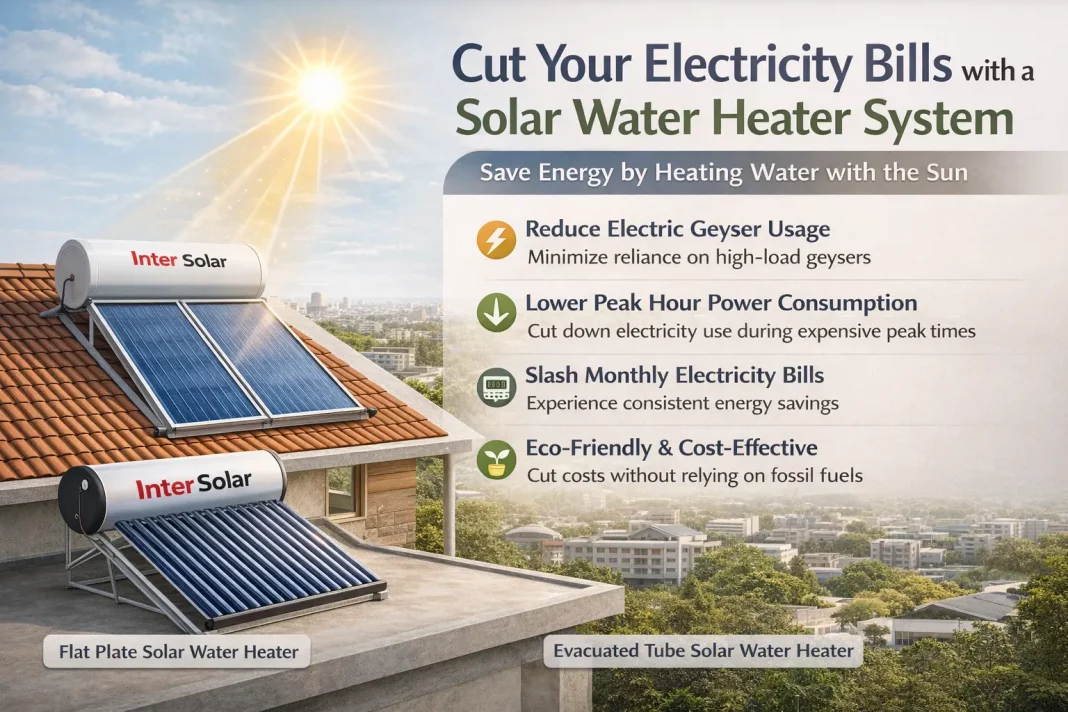
Flat Plate Solar Water Heater
A Flat Plate Solar Water Heater uses a flat absorber plate under toughened glass. It works well in places where sunlight is fairly consistent and winters are not punishing.
It often suits:
- Independent homes with routine morning and evening usage
- Small commercial sites that do not need round-the-clock hot water
- Buildings where durability matters more than peak winter performance
Flat plate systems usually feel steady. They do not overreact. They heat well through most of the year, and they keep maintenance fairly straightforward.
Evacuated Tube System (ETC) Solar Water Heater
An Evacuated Tube System (ETC) Solar Water Heater uses vacuum-sealed tubes. That vacuum reduces heat loss, which matters more than people think once winter arrives or when mornings are cold.
ETC systems often fit:
- Apartments and group housing where demand stays consistent
- Hotels, hostels, hospitals, and institutions
- Sites that see winter fog, cloudy stretches, or early morning high usage
Because ETC systems hold heat longer, they usually reduce backup heating more effectively. Over time, that shows up in bills.
What Savings Look Like for Homes
Residential savings are not always dramatic in month one. But they become obvious once habits stay the same and the bill starts behaving differently.
Typical changes after installing a solar water heater include:
- The geyser stays off more often, especially in summer
- Backup heating drops to short bursts rather than long cycles
- Peak-hour electricity use reduces because hot water is already stored
In many homes, hot water becomes a set-and-forget utility. People stop checking whether the geyser is on. That alone prevents waste. And yes, small things like that add up because electricity bills punish small carelessness.
Commercial and Industrial Use: Where the Numbers Add Up Faster
In commercial buildings, hot water demand is different. Sometimes it is steady, and suddenly it spikes dramatically. Breakfast rush at hotels. Laundry loads. Hospital sanitation routines. Shift changes in certain plants.
This is where solar water heating becomes a strategic decision, not just a “green upgrade”. It reduces the baseline electricity load. That baseline is what businesses pay for every single day.
Benefits that matter to commercial users include:
- Lower operating costs tied to water heating
- Reduced dependence on fuel-based heating in some setups
- Better control over energy planning across seasons
- More predictable bills during high-usage months
Maintenance and Longevity: A Quiet Advantage
Solar water heaters do not require constant attention, but they do appreciate basic care. That sounds like a small detail, but it is where long-term value sits.
Routine upkeep usually involves:
- Cleaning the collector surface if dust builds up
- Checking insulation and piping joints during annual inspection
- Watching for scaling in hard water regions
With proper installation, systems last years without drama. This is also why buyers often look at providers linked with experienced solar panel manufacturers in India, because the engineering mindset carries across, especially in build quality and installation discipline.
Rooftop Space and Practical Planning
Rooftops are busy spaces now. Water tanks, dish antennas, shade structures, maybe PV plans later. The good news is solar water heating systems do not need the entire roof. They need correct orientation and safe mounting.
Good planning keeps things practical:
- Proper slope and placement improves heat capture
- Safe mounting prevents long-term structural issues
- Clear access helps when cleaning or inspection is needed
Why Solar Water Heating Works Well With Solar Power Panels
Solar power panels get the spotlight, but water heating often gives faster returns. Heating water takes serious energy. Reducing that load first can make the rest of a home’s energy plan simpler.
A Solar Water Heater System can:
- Cut a large chunk of electricity use without changing behaviour
- Reduce the size needed for future PV installations
- Make rooftop energy planning feel manageable rather than overwhelming
The Long-Term View on Savings
Solar water heating does not feel like a flashy upgrade. It feels like a quiet correction. Electricity stops paying for something the sun can handle for free.
For households, the change feels like fewer unpleasant bill surprises. For businesses, it feels like one less operating expense that keeps rising for no reason.
That is why solar water heating keeps expanding. Not because it is trendy. Because it is practical.