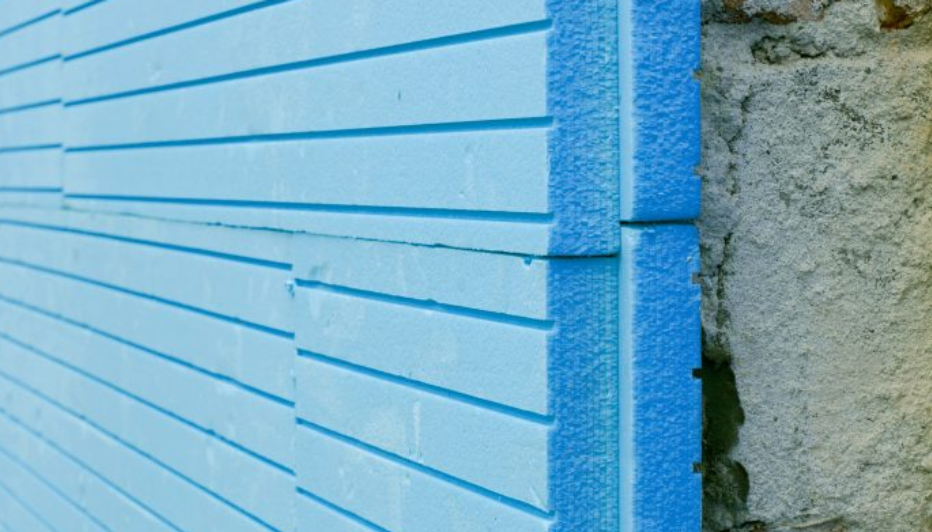

There is a particular kind of building failure that takes years to reveal itself. The structure looks fine. The heating and cooling systems run harder than they should, but that gets blamed on occupant behaviour or ageing equipment. Then a renovation opens up a wall or a slab edge, and the insulation inside — saturated, compressed, half its original thickness — tells the real story. This is happening in Australian buildings across every climate zone, and it is driving a quiet but significant shift towards XPS insulation in Australia, particularly in applications where moisture and load combine in ways that softer materials cannot survive long-term.
What Happens Under a Slab
Concrete slabs sit on ground that breathes. Moisture moves upward through capillary action continuously, regardless of season. Insulation placed below a slab or at its perimeter is not in a dry, stable environment — it is in sustained contact with damp ground whilst simultaneously bearing the compressive weight of the structure above. Mineral wool collapses under that load and wicks moisture into its fibres. Expanded polystyrene beads absorb water slowly at their boundaries. Neither material performs according to the installation specifications after several years in this position. XPS resists both problems because its closed-cell matrix leaves no pathway for moisture to enter and no air void to compress. A slab insulated with XPS performs thermally at year fifteen the same way it did at installation. That is not true of most alternatives placed in identical conditions.
The Roof Nobody Thinks About
Commercial flat roofs in Australia carry insulation above the waterproofing membrane in what is called an inverted assembly. This arrangement protects the membrane from UV degradation and thermal shock — the extreme expansion and contraction that cracks and splits conventional warm roof membranes over time. The insulation in this position sits exposed to ponding water after rainfall, compressive loads from maintenance foot traffic, and ballast weight from pavers or gravel. XPS insulation in Australia commercial projects is specified for this application almost universally because other materials placed here deteriorate invisibly. The membrane beneath looks intact. The insulation above it, saturated and thermally useless, is only discovered during re-roofing — often alongside a repair bill that dwarfs the original material saving.
The Vapour Problem in Northern Climates
Darwin, Cairns, Broome — buildings in tropical and subtropical Australia face a vapour drive that cooler-climate builders rarely encounter. Warm, humid exterior air pushes moisture inward through the building envelope continuously during the wet season. If insulation with high vapour permeability sits in the wall or roof assembly, that moisture migrates through it and condenses on the cooler interior surface behind. Mould follows. Timber degrades. The problem compounds quietly for years before it becomes visible. XPS insulation in Australia tropical installations works because low vapour permeability slows that inward drive without requiring a separate vapour barrier in every assembly. One material handles two jobs simultaneously — a genuinely useful characteristic in climates where additional layers mean additional failure points.
Cold Bridging at the Slab Edge
The perimeter of a concrete slab is one of the most consistent sources of heat loss in Australian homes, and it receives almost no attention in mainstream renovation advice. The slab edge is exposed to the outside air temperature directly. Without edge insulation, the entire thermal mass of the slab connects to the exterior through an unbroken concrete path. Heat bleeds out continuously through winter. In summer, radiant heat conducts inward through the same path. XPS fitted vertically at the slab perimeter interrupts this bridge cleanly. The compressive strength required to do this without crushing under backfill pressure or foot traffic at the perimeter eliminates most other insulation materials from consideration before specification even begins.
Conclusion
XPS insulation in Australia is gaining ground because the conditions here expose insulation weaknesses faster than moderate climates do. Ground moisture, tropical vapour drive, inverted roof exposure, and slab edge thermal bridging are not edge cases — they are standard Australian building conditions. A material that handles all of them without degrading over time is genuinely useful. The installations that fail are rarely about the XPS itself. They are about the cut edges, the skipped tape, and the joints nobody bothered to stagger.