
If a technician has told you your garage door springs need replacing, understanding exactly what that process involves can ease a lot of uncertainty. Knowing what to expect from professional garage door spring repair helps you feel more prepared and lets you ask better questions throughout the appointment.
The Initial Inspection Process
A technician begins by examining the current springs closely, checking for visible damage, rust, or separation in the coils. They’ll also measure the door’s exact weight along with the spring’s wire gauge, overall length, and coil diameter. This step matters significantly because using springs with incorrect specifications results in a door that’s either too difficult to lift manually or one that wears out the opener prematurely from excess strain.
Why Replacing Just One Spring Rarely Makes Sense
Even when only one spring has visibly broken, most reputable technicians recommend replacing both springs together. Springs installed at the same time typically experience similar wear rates throughout their lifespan, so if one has already failed, the other is usually not far behind. Replacing just the broken spring often results in a second service call within a relatively short window, ultimately costing more than handling both at once.
Safety Measures Throughout the Repair
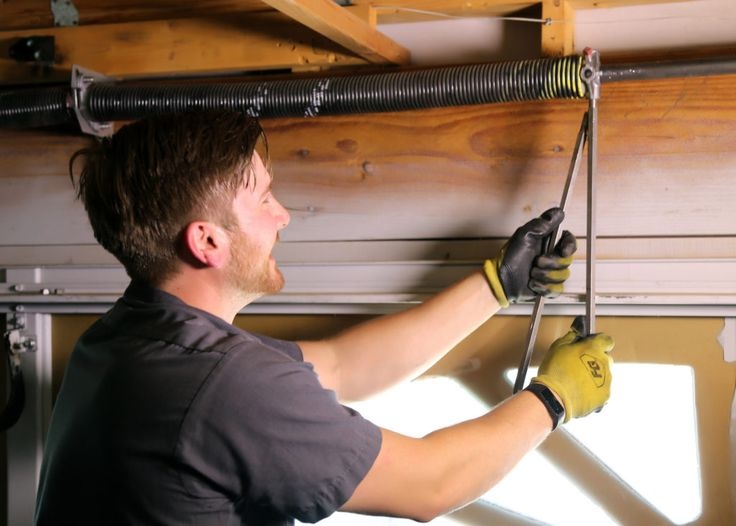
Spring replacement involves carefully releasing and then resetting significant stored tension, which is exactly why this isn’t a task suited for guesswork or amateur attempts. Professional technicians use specialized winding bars and other purpose built tools designed specifically for this work, along with established safety procedures that prevent the spring from releasing unexpectedly during the process.
Testing the Door After New Springs Are Installed
Once new springs are in place, a proper repair doesn’t simply end there. The technician tests the door’s overall balance by checking that it holds its position when opened partway. They’ll also adjust the opener’s force settings if needed, since new springs change how much resistance the opener has to work against compared to the old, worn ones.
Typical Timeframe for This Repair
Most spring replacements are completed within an hour or two, depending on the door type and whether any additional issues surface during the inspection process, such as worn cables or rollers that are worth addressing during the same visit to avoid a repeat appointment later.
Questions Worth Asking Beforehand
Before scheduling a repair, it’s reasonable to ask what specific type of spring will be used, whether the warranty covers both parts and labor, and whether the technician plans to inspect related components like cables and rollers while they’re already working on the door. A thorough technician often catches related issues before they develop into separate, future problems.
Understanding the Cost Breakdown
Spring replacement costs depend on the specific type of spring needed, your door’s size and weight, and whether any additional components need attention during the same visit. A transparent technician will break down these costs clearly before beginning work, rather than presenting a single vague total.
Why Waiting Isn’t the Best Strategy
A broken or visibly failing spring isn’t something worth putting off, given both the genuine safety risk involved and the daily inconvenience of a door that won’t operate properly. What seems like a manageable inconvenience today can become a more urgent, less convenient problem tomorrow.
Scheduling Your Repair
If you’ve noticed any warning signs with your garage door springs, don’t wait for a complete failure to force the issue. Reach out for professional garage door spring repair, and get your door back to operating safely and smoothly with springs properly sized and correctly calibrated for your exact door.



