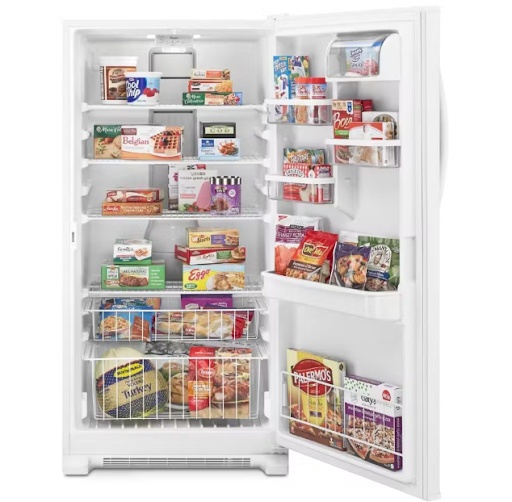

When a freezer stops working for a household, people notice immediately. When it works badly for years, most just adapt without realising they are doing it — shuffling things around, forgetting what is buried underneath, defrosting on a weekend they had planned for something else entirely. Choosing upright freezers for sale is, for many households, less a lifestyle upgrade and more a correction to a problem they had quietly accepted. The difference shows up not in one dramatic moment but in dozens of small frustrations that simply stop happening.
The Food Waste Nobody Tracks
Most households, if asked, would say food waste happens because things go off before they get used. What actually happens in a lot of cases is different. Frozen food gets covered by other frozen food, slides to the back or the bottom, and disappears until it surfaces months later in a state nobody wants to deal with. Upright freezers use shelves and door compartments so everything stays visible. That sounds minor until you notice the shopping bill dropping because duplicates stop being bought and forgotten items start getting used. The layout does not just help with organisation — it quietly changes behaviour in ways that add up over time.
Chest Freezers Have Limits Worth Knowing
They hold temperature well and handle a power cut better than most alternatives because cold air does not rush out when a lid opens rather than a door. Those are real advantages, and it is worth saying so plainly. But the way food is accessed in a chest freezer creates a problem that grows with use. Everything on top has to come out before anything underneath can be reached, and that process gets more annoying the more regularly it happens. Upright freezers for sale keep the same capacity but distribute it across shelves and drawers – access to anything does not require unpacking everything else first.
What Frost-Free Actually Does
Manual defrosting is one of those tasks that keeps getting postponed until it genuinely cannot be postponed anymore. Ice builds up, usable space shrinks, and the appliance works harder than it should to maintain temperature through an increasingly thick layer of frost. Frost-free technology in upright freezers circulates air through the cabinet to stop ice from forming, which means the internal dimensions stay what they were when the appliance was new. The compressor is not fighting against the insulation it created itself. That efficiency is not dramatic, but it is consistent, and consistent gains across years of daily use are nothing.
Space Works Differently Upright
British utility rooms and kitchen extensions are not generous with floor space, and chest freezers are hungry for it. The lid needs clearance to open fully, which usually rules out placing one flush against a wall without leaving an awkward gap. An upright model takes up a narrow rectangle of floor and opens with a standard door swing, the same as any other kitchen appliance. In a tight space, that distinction matters more than capacity figures. Height is available where width is not, and upright freezers are built to use it.
Temperature and What Gets Stored Where
Not all frozen food benefits from identical storage conditions, and most people never think about this when buying a freezer. Upright models with distinct internal zones — a colder area for long-term storage and a more accessible section for things used regularly — handle that distinction properly. Bread and frequently used meal components do better somewhere slightly less extreme than meat stored for several months. A chest freezer cannot offer that separation in any practical way. The design of an upright cabinet makes it possible without requiring any particular effort from the user.
Conclusion
Appliances that work well tend to become invisible — they do their job, and nobody thinks about them. A freezer that requires regular management, causes food to be wasted, or takes up more space than a home can comfortably give it, never reaches that point. Upright freezers for sale today are designed around how households actually use frozen storage rather than around manufacturing convenience. For anyone who has spent years working around a freezer instead of simply using one, that shift in approach is precisely what makes the difference.