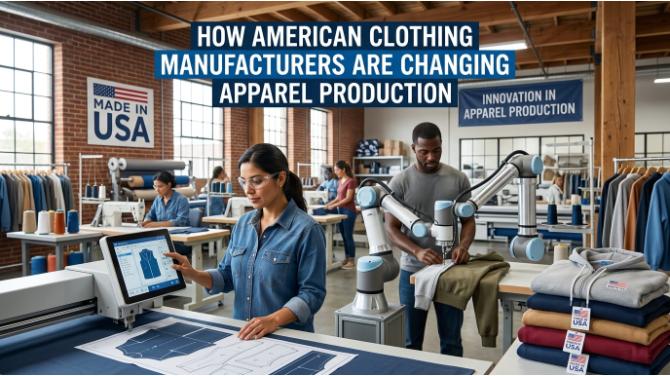

The apparel industry is undergoing a significant transformation as brands rethink how, where, and why their products are manufactured. For decades, clothing production has often been associated with large overseas supply chains, extended lead times, high minimum order quantities, and complex logistics. Today, however, changing consumer expectations and increasingly unpredictable markets are encouraging brands to reconsider the advantages of working with domestic and strategically positioned production partners.
American apparel production is evolving beyond traditional cut-and-sew manufacturing. Modern factories and production partners are combining craftsmanship with technology, flexible production models, improved quality control, responsible sourcing, and faster communication. These changes are giving established brands and emerging labels new ways to manage inventory, respond to trends, and develop products with greater consistency.
The shift is particularly important for companies that compete on quality, customization, reliability, and brand identity. Rather than viewing manufacturing as a simple back-end function, successful apparel companies increasingly treat production as a strategic part of the customer experience. From fabric selection and sampling to finishing, packaging, and fulfillment, every stage can influence the perceived value of a product.
The Rise of More Responsive Apparel Manufacturing
One of the biggest changes in modern apparel production is the growing demand for flexibility. Fashion trends can change quickly, while customer preferences are increasingly influenced by social media, seasonal events, cultural movements, and direct feedback. Brands that commit to enormous production runs months in advance can find themselves carrying excess inventory when demand shifts unexpectedly.
American manufacturers can provide an alternative for brands that prioritize responsiveness. Shorter communication cycles make it easier to discuss product adjustments, review samples, clarify technical specifications, and address quality concerns. While domestic manufacturing does not automatically guarantee faster production, geographic proximity can simplify collaboration and reduce some of the communication challenges associated with distant supply chains.
This is especially valuable during product development. Designers can refine a garment after reviewing a physical sample rather than relying exclusively on digital specifications. Pattern corrections, fabric substitutions, stitching changes, trim adjustments, and fit modifications can be discussed directly with production teams.
For brands, the result can be a more controlled development process. Instead of treating manufacturing as a fixed process that begins only after a design is finalized, production becomes an iterative stage where design and manufacturing expertise work together.
Technology Is Modernizing Traditional Clothing Production
American apparel manufacturing is also changing through the adoption of digital technologies. Computer-aided design, digital pattern development, automated cutting systems, inventory management platforms, and modern production tracking tools are helping manufacturers improve accuracy and reduce unnecessary waste.
Technology does not eliminate the importance of skilled workers. Instead, it can help production teams perform repetitive or precision-dependent tasks more consistently. Digital pattern systems can make it easier to modify dimensions, while automated cutting equipment can optimize fabric layouts and improve material utilization.
Manufacturers can also use digital workflows to maintain clearer records throughout the product lifecycle. A structured technical package may contain measurements, fabric specifications, color references, construction details, trims, labels, and finishing requirements. Keeping these specifications organized helps reduce ambiguity between design and production teams.
Several technologies are particularly relevant to modern apparel manufacturing:
- Computer-aided design: Helps designers and manufacturers develop, revise, and organize garment specifications digitally.
- Digital pattern making: Allows accurate adjustments to garment dimensions and grading requirements.
- Automated cutting: Improves cutting consistency while helping optimize material usage.
- Production tracking: Provides greater visibility into manufacturing progress and order status.
- Digital quality documentation: Creates clearer records for inspections, specifications, and production approvals.
These capabilities matter because modern brands need both creativity and operational precision. A compelling design has limited commercial value if the final product does not consistently match the original specifications.
Quality Control Is Becoming a Competitive Advantage
Consumers have become more discerning about garment construction and material quality. Small details such as uneven seams, inaccurate sizing, weak hardware, poor color consistency, or premature fabric deterioration can damage a brand’s reputation. As a result, quality control is no longer simply a factory responsibility; it is an essential component of brand management.
Modern manufacturing programs typically place quality checkpoints throughout production rather than waiting until finished products are ready to ship. Pre-production samples allow brands to evaluate the construction before committing to a full run. During production, inspections can identify issues before defects spread across an entire batch.
A strong quality program can examine areas such as:
- Garment measurements and size grading
- Seam construction and stitch consistency
- Fabric color and texture
- Print, embroidery, and branding placement
- Zippers, buttons, snaps, and other hardware
- Label and care-instruction accuracy
- Packaging and final presentation
This approach is especially important for brands selling premium products. Customers purchasing higher-priced clothing expect consistency between the product photography, product description, and physical item they receive.
American Production Is Expanding Beyond Basic Garments
The definition of apparel manufacturing is also becoming broader. Clothing brands are increasingly building complete lifestyle collections rather than relying exclusively on shirts, jackets, trousers, dresses, or outerwear. Accessories can complement apparel collections while creating additional opportunities for cross-selling and brand visibility.
This shift makes sense from a commercial perspective. Apparel often involves fit-related considerations, multiple sizes, and higher return potential. Accessories can be easier to merchandise because many products do not require complicated sizing. They can also support a clothing collection by reinforcing a consistent visual identity across multiple product categories.
For brands targeting commuters, travelers, students, professionals, or urban consumers, wholesale cross body bags bulk can complement apparel collections with a practical product designed for everyday use.
Cross-body bags can also provide an opportunity to experiment with materials, colors, branding treatments, compartments, closures, and strap configurations. A clothing company that already has a recognizable aesthetic can carry those design principles into an accessory line without abandoning its established identity.
Sustainability Is Influencing Production Decisions
Sustainability has become another major factor changing apparel manufacturing. Brands and consumers are paying greater attention to material sourcing, production waste, product durability, packaging, and the overall environmental impact of supply chains.
One important development is the growing emphasis on durability. Producing a garment that lasts longer can change the relationship between manufacturing cost and perceived value. Instead of competing solely on low retail prices, brands can position products around construction quality, longevity, repairability, and responsible consumption.
Manufacturers can support this approach by helping brands evaluate different textiles and construction methods. Fabric weight, fiber composition, dyeing methods, reinforcement techniques, and finishing processes can all affect how a finished product performs over time.
Waste reduction is another consideration. Better pattern planning can increase fabric utilization, while more accurate production forecasting can reduce the risk of manufacturing products that ultimately remain unsold. Small improvements across thousands of units can produce meaningful operational benefits.
| Manufacturing Trend | Production Impact | Brand Benefit |
|---|---|---|
| Digital production tools | Improves design accuracy and workflow visibility | Fewer specification errors and better development control |
| Flexible production | Supports smaller or phased production runs | Reduced inventory exposure and greater market responsiveness |
| Advanced quality control | Identifies defects throughout production | More consistent products and stronger customer satisfaction |
| Sustainable material strategies | Encourages efficient sourcing and reduced waste | Supports durability and responsible brand positioning |
| Accessory diversification | Extends manufacturing into complementary categories | Creates additional revenue and cross-selling opportunities |
Accessories Are Creating New Revenue Opportunities
Accessories can play a particularly useful role in a clothing company’s growth strategy. A customer who discovers a brand through apparel may be receptive to products that extend the same aesthetic into everyday utility. This can increase average order value while making the brand more visible outside the traditional wardrobe.
Tote bags are a strong example because they can serve several different audiences. A well-designed tote can function as a shopping bag, work bag, beach carryall, gym accessory, travel companion, or promotional item. Its broad functionality makes it suitable for fashion brands, lifestyle companies, organizations, and corporate programs.
For brands developing coordinated accessory collections, wholesale tote bags can provide a practical way to expand beyond traditional apparel while maintaining a cohesive product assortment.
The manufacturing considerations for a premium tote can be surprisingly detailed. Fabric weight, handle attachment, seam reinforcement, pocket construction, lining, closures, edge finishing, and print durability all influence the final product. A lightweight promotional bag and a premium retail tote may share a basic silhouette, but their construction standards can be dramatically different.
Brands should therefore define the intended use before selecting specifications. A tote designed for daily commuting may require stronger handles and reinforced stress points, while a lightweight event tote may prioritize portability and economical production.
Hybrid Work Is Driving Demand for Functional Tech Gear
The workplace has also influenced the direction of apparel and accessory manufacturing. Professionals increasingly move between homes, offices, coworking spaces, airports, universities, and client locations. This lifestyle creates demand for products that combine fashion with practical functionality.
Laptop bags are particularly relevant because consumers expect them to protect expensive electronics while still fitting their personal style. Manufacturers therefore need to consider more than external appearance. Internal padding, compartment organization, lining materials, zipper quality, handle construction, and shoulder-strap ergonomics can all influence product performance.
Clothing brands that want to enter this category need to approach it as a functional product-development exercise rather than simply adding a laptop compartment to an existing bag design. Protection, weight distribution, accessibility, and durability should be considered during the earliest stages of development.
For apparel labels targeting professionals and hybrid workers, wholesale canvas laptop bags can provide an opportunity to combine practical technology protection with a more tactile, fashion-oriented material aesthetic.
Domestic Manufacturing Can Strengthen Supply Chain Resilience
Global supply chains have demonstrated how vulnerable apparel businesses can become when transportation disruptions, material shortages, labor constraints, or unexpected demand changes affect production. A geographically diversified sourcing strategy can reduce dependence on a single production region.
That does not necessarily mean every brand should move its entire supply chain domestically. Instead, companies can evaluate which products benefit most from closer production relationships. Core collections, limited-edition releases, replenishment items, custom corporate merchandise, and products with unpredictable demand may require different manufacturing strategies.
A diversified sourcing model can give companies more options. A brand might use one production network for high-volume staple products and another for smaller, more responsive collections. The right structure depends on product complexity, cost targets, delivery requirements, order volume, and customer expectations.
How Brands Can Adapt Their Production Strategy
Changing manufacturing conditions create opportunities, but brands need a disciplined process for taking advantage of them. Simply selecting a domestic factory does not guarantee better results. Companies should evaluate production partners according to their own commercial objectives.
- Define product requirements. Establish target materials, dimensions, construction methods, color standards, packaging needs, estimated volumes, and intended retail positioning.
- Prepare detailed technical documentation. A clear tech pack gives manufacturers measurable instructions and reduces the risk of interpretation errors.
- Request development samples. Evaluate construction, fit, materials, finishing, and usability before approving bulk production.
- Establish quality benchmarks. Agree on inspection procedures, acceptable defect levels, tolerances, and approval processes before manufacturing begins.
- Review production capacity. Confirm that the manufacturer can support both initial orders and future replenishment requirements.
- Monitor performance. Track quality, lead times, communication, defect rates, and delivery performance over multiple production cycles.
This structured approach helps turn manufacturing from a transactional purchasing decision into a long-term operational relationship. It also makes it easier to identify whether a supplier is genuinely capable of supporting growth.
What Brands Should Look for in a Modern Manufacturing Partner
The ideal manufacturing partner should align with more than a target unit cost. Price remains important, but a low manufacturing quote can become expensive if it leads to inconsistent quality, missed delivery windows, excessive waste, or frequent revisions.
Brands should examine production capabilities, communication standards, sampling procedures, material expertise, quality systems, customization options, capacity, and experience with the relevant product category.
It is also useful to consider whether a manufacturing partner can support a broader product ecosystem. A company that can coordinate apparel with bags, accessories, travel products, or other complementary goods may simplify vendor management and create a more unified customer experience.
For growing companies, scalability deserves particular attention. A supplier that handles a small initial order successfully may still struggle when demand increases significantly. Discussing projected growth early helps both sides prepare for larger production requirements.
The Future of American Apparel Production
The future of American clothing manufacturing is unlikely to be defined by one single production model. Instead, the industry is moving toward greater specialization, flexibility, transparency, and technological integration.
Brands will continue to balance production costs against factors such as speed, quality, sustainability, customization, and supply chain resilience. For some businesses, domestic production may become a larger component of their overall sourcing strategy. For others, American manufacturing may be particularly valuable for premium products, rapid replenishment, limited collections, or highly customized merchandise.
What is changing is the role of the manufacturer. Production partners are increasingly expected to contribute knowledge rather than simply follow instructions. Their understanding of fabrics, construction, production engineering, quality control, and product development can influence the commercial success of the final product.
This evolution benefits brands that approach manufacturing strategically. When designers, product teams, sourcing professionals, and manufacturers collaborate from the beginning, they can identify production challenges earlier and create products that are both aesthetically compelling and commercially practical.
Frequently Asked Questions (FAQs)
Why are American clothing manufacturers becoming more important to apparel brands?
American clothing manufacturers can provide brands with closer collaboration, greater production visibility, and opportunities for more responsive sourcing strategies. Their value depends on the manufacturer’s capabilities, product category, capacity, pricing, and the brand’s specific requirements.
Can domestic apparel manufacturing support smaller brands?
It can, although minimum order quantities, pricing, production capacity, and specialization vary considerably between manufacturers. Smaller brands should evaluate suppliers based on their actual order requirements and future growth plans rather than assuming every domestic producer follows the same model.
How can accessories complement a clothing collection?
Accessories can extend a brand’s visual identity into products used outside the wardrobe. Bags, totes, and technology-focused carry products can also provide additional merchandising opportunities and may have fewer fit-related purchasing barriers than traditional apparel.
What should a brand include in a manufacturing tech pack?
A comprehensive tech pack can include technical drawings, measurements, grading specifications, fabric composition and weight, colors, stitching requirements, trims, labels, artwork placement, packaging instructions, and other construction details relevant to the product.
Does American manufacturing automatically mean higher quality?
Not necessarily. Manufacturing quality depends on the individual production partner, processes, materials, workforce, inspection standards, equipment, and product specifications. Brands should assess actual capabilities and quality-control procedures rather than relying solely on geographic location.
How can manufacturers help brands become more sustainable?
Manufacturers can contribute through efficient pattern layouts, responsible material selection, durable construction, waste reduction, production planning, and appropriate packaging strategies. Sustainability is most effective when these considerations are incorporated throughout product development rather than added after production decisions have already been made.
Build a More Resilient Apparel Production Strategy
The apparel industry is moving toward a manufacturing environment where responsiveness, product quality, technological capability, and supply chain resilience matter just as much as production cost. Brands that recognize this shift can make smarter sourcing decisions and build product collections designed for long-term commercial performance.
Whether the goal is improving core garment production, developing complementary accessories, reducing supply chain risk, or creating a more responsive product-development process, the right manufacturing relationship can become a genuine competitive advantage.
Now is the time for apparel brands to reassess their production strategy, strengthen supplier relationships, and identify manufacturing partners capable of supporting their next stage of growth. A thoughtful approach to production can help transform creative concepts into reliable products while creating a stronger foundation for sustainable expansion.