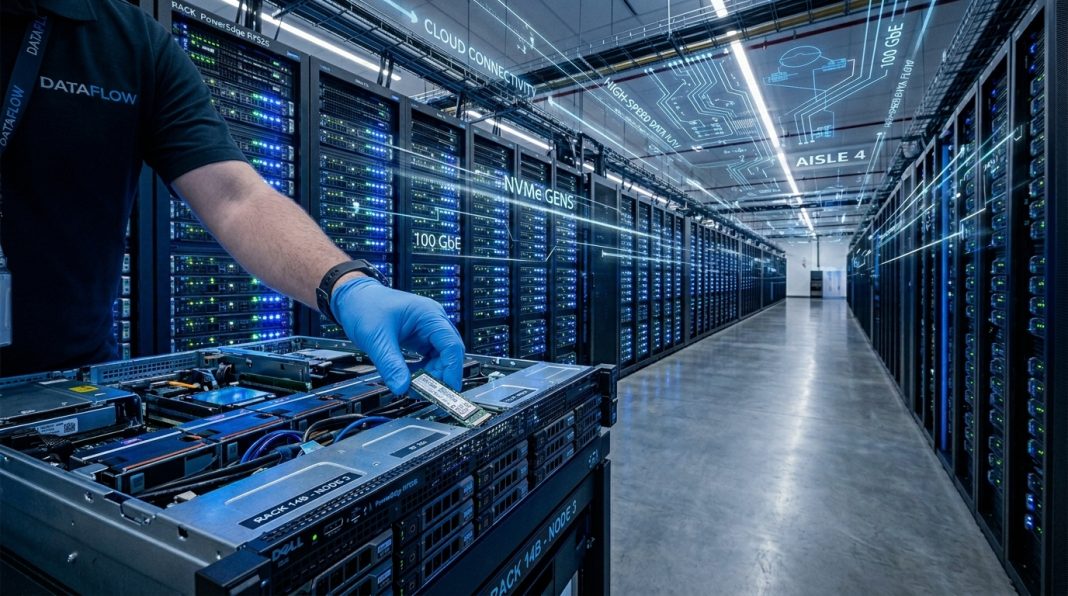

The world runs on data, and the speed at which that data moves determines who wins and who falls behind. Inside every modern data center, hidden behind racks of humming servers and blinking LEDs, are the storage systems that keep entire businesses alive. As workloads grow more demanding and latency tolerances shrink to near zero, the pressure to choose the right storage technology has never been greater. Solid-state drives have evolved from desktop upgrades into mission-critical infrastructure components, and nowhere is that transformation more visible than in cloud computing environments where milliseconds translate directly into revenue. This article explores the best enterprise SSDs available today, what makes them stand apart, and how to choose the right one for your specific data center needs.
Why Enterprise SSDs Are the Backbone of Modern Data Centers
Not all SSDs are created equal. The drives you find in consumer laptops are designed for light, intermittent workloads. Enterprise SSDs, by contrast, are engineered to handle continuous, high-intensity operations around the clock without degradation in performance or reliability. The difference lies in endurance ratings, error correction capabilities, power loss protection, and the firmware that governs how data is written and managed over time.
For organizations that need to scale their storage infrastructure quickly and cost-effectively, the ability to buy SSDs in bulk from trusted vendors becomes a strategic advantage, allowing IT teams to standardize configurations, negotiate volume pricing, and ensure consistency across thousands of server nodes. Beyond procurement, the quality of the drive itself determines whether a storage deployment will perform at peak capacity for five years or begin throttling within months under heavy workloads.
Data centers depend on storage that can sustain high random read and write speeds simultaneously. Unlike sequential workloads, random access patterns are the norm in cloud environments where thousands of virtual machines compete for I/O resources. Enterprise SSDs are designed specifically for this environment, with optimized NAND flash configurations and advanced controllers that minimize write amplification and maintain consistent latency even under sustained pressure.
Key Specifications to Evaluate Before You Buy
Endurance and TBW Ratings
Total Bytes Written, or TBW, is one of the most important metrics to understand when evaluating enterprise storage. A drive with a higher TBW rating can absorb more write operations over its lifetime, making it better suited for write-intensive workloads like database logging, analytics processing, or virtual desktop infrastructure. Enterprise-class drives typically offer TBW ratings that dwarf consumer models, ranging from several hundred terabytes to multiple petabytes depending on the capacity tier.
Interface and Form Factor
The interface a drive uses determines how fast it can communicate with the host system. NVMe drives connected via PCIe lanes offer dramatically lower latency and higher throughput than drives using the older SATA interface. For data centers running modern workloads, NVMe over PCIe Gen 4 or Gen 5 is rapidly becoming the standard, with sequential read speeds exceeding 7,000 MB/s on the top-performing models. U.2 and E1.S form factors are particularly popular in server environments because they allow hot-swapping and better thermal management compared to M.2 drives.
Power Loss Protection
In a data center, power interruptions can occur at any moment. Without proper protection, a power loss mid-write can corrupt data and render entire volumes unreadable. Enterprise SSDs include capacitors that provide enough residual power to flush all in-flight data to NAND flash before the system goes dark. This feature, often absent in consumer drives, is non-negotiable in production environments.
Top Enterprise SSDs Worth Considering in 2025
Samsung PM9A3 Series
Samsung has long been a dominant force in the enterprise storage market, and the PM9A3 continues that tradition. Built on Samsung’s proprietary V-NAND technology, this NVMe drive delivers sequential read speeds of up to 6,900 MB/s and offers exceptional endurance suitable for mixed workloads. Its consistent latency performance under queue depth stress makes it a reliable choice for virtualization platforms and cloud-native applications. The drive also features end-to-end data path protection, ensuring data integrity from the host interface all the way through to the NAND cells.
Micron 7450 Series
Micron’s 7450 is purpose-built for demanding data center applications, leveraging the company’s 176-layer TLC NAND to deliver a balance of density and performance. Available in capacities ranging from 960 GB to 15.36 TB, the 7450 series offers flexibility for storage administrators who need to support diverse workloads within the same infrastructure. Its power efficiency is notably improved over previous generations, which matters in large-scale deployments where energy costs represent a significant portion of operating expenses. The drive is also optimized for AI and machine learning workloads, where fast storage directly impacts training throughput.
Kioxia CM7 Series
Kioxia entered the Gen 5 NVMe space with the CM7, a drive that pushes the performance envelope further than most competing options. Sequential read speeds reach up to 14,000 MB/s, making it one of the fastest enterprise SSDs currently available. The CM7 targets hyperscale environments where the sheer volume of concurrent I/O operations demands the highest possible bandwidth. Its support for NVMe 2.0 features, including improved namespace management and enhanced security protocols, makes it a forward-looking investment for data centers planning infrastructure refreshes over the next several years.
Seagate Nytro 5350
Seagate’s Nytro line addresses the needs of mixed-use data center environments where a single drive must perform acceptably across both read-intensive and write-intensive workloads. The Nytro 5350 uses PCIe Gen 4 connectivity and offers capacities up to 30.72 TB in a single U.2 drive, which is especially valuable in storage-dense deployments where rack space is at a premium. Its variable sector size support allows system administrators to fine-tune the drive’s behavior for specific applications without replacing hardware.
Western Digital Ultrastar DC SN655
Western Digital’s Ultrastar DC SN655 is built for hyperscale cloud infrastructure and features the company’s BiCS5 3D NAND technology. Its architecture is optimized for large sequential transfers, which makes it particularly well-suited for object storage, backup targets, and content delivery networks. The drive’s power profiles can be adjusted dynamically, allowing cloud providers to balance performance against energy consumption in real time. Western Digital’s long history in enterprise storage gives the Ultrastar line a reputation for predictable behavior and mature firmware that data center operators can depend on.
Enterprise SSDs in Cloud Computing Environments
Latency at Scale
Cloud computing environments operate at a scale that amplifies even minor inefficiencies. A storage latency increase of just a few microseconds, multiplied across thousands of concurrent operations, can translate into perceptible delays at the application layer. Enterprise SSDs designed for cloud infrastructure are engineered with deterministic latency as a primary design goal, meaning they aim to deliver consistent response times regardless of the workload mix. This predictability is essential for service providers operating under strict SLA commitments.
Tiered Storage Architectures
Modern cloud data centers rarely rely on a single class of storage. Instead, they implement tiered architectures where the most frequently accessed data resides on the fastest, most expensive drives while colder data is moved to higher-capacity, lower-cost media. Enterprise SSDs occupy the top tiers of these architectures, handling the data that needs to be retrieved in microseconds. Storage management software continuously monitors access patterns and migrates data between tiers automatically, ensuring that high-performance drives are never wasted on infrequently accessed content.
Security and Compliance
Enterprise SSDs deployed in cloud environments must also meet stringent security requirements. Self-encrypting drives with AES-256 encryption protect data at rest without imposing a performance penalty, since the encryption engine operates independently of the main data path. Many enterprise SSD manufacturers also support TCG Opal and TCG Enterprise security protocols, which enable centralized key management and cryptographic erasure features that satisfy data residency and compliance requirements in regulated industries.
Making the Right Choice for Your Infrastructure
Choosing the right enterprise SSD comes down to understanding your workload profile, your capacity requirements, and your budget constraints. Read-intensive workloads, such as database queries and analytics, favor drives with high endurance QLC or TLC NAND and strong sequential read performance. Write-intensive workloads, like transaction logging and real-time data ingestion, demand drives with higher write endurance and lower write latency. Mixed workloads require a balanced approach, and fortunately most leading vendors offer mixed-use variants within their product families.
Total cost of ownership matters as much as purchase price. A cheaper drive that requires replacement every two years will ultimately cost more than a premium enterprise SSD that operates reliably for five years under the same conditions. Factoring in downtime risk, labor costs, and the impact of performance degradation on applications makes the case for investing in quality storage even clearer.
Conclusion
Storage technology is no longer an afterthought in data center design. It sits at the heart of every workload, every transaction, and every user interaction that flows through a modern cloud environment. Enterprise SSDs have matured into sophisticated, purpose-engineered components that deliver the performance, reliability, and security that mission-critical infrastructure demands. Whether you are outfitting a new hyperscale facility, refreshing an aging storage tier, or scaling out a private cloud deployment, the right SSD choice will define your infrastructure’s performance ceiling for years to come. Investing time in evaluating the top contenders and matching their capabilities to your specific workload requirements is not just good practice. It is the foundation of a resilient, high-performance data center strategy built for the demands of tomorrow.