Every disease leaves fingerprints. For example, cancer cells leave markers on their surface. Inflammation produces chemical messengers. The challenge is finding those fingerprints before the disease advances.
That is where antibodies come in. They are the molecular detectives that scientists have trained to recognize exactly what they are looking for. When an antibody finds its target, it sticks. And that binding triggers a signal that says: this disease is here.
Understanding how this works reveals why the monoclonal antibody production process matters so much for modern medicine.
The Lock and Key Principle
An antibody is incredibly specific. Think of it like a key designed to fit only one lock. Monoclonal antibodies produced by hybridomas are highly specific to a single epitope on an antigen. This specificity is crucial in applications like cancer therapies and diagnostic tests, where precise targeting is necessary to avoid off target effects.
Hybridomas are hybrid cells that arise from the fusion of spleen cells from an immunized mouse and cultured plasmacytoma cells, a type of cancer cell. This technique allows for the continuous production of monoclonal antibodies that are identical because they are derived from a single clone of hybridoma cells.
When you understand the monoclonal antibody production process, you see why consistency matters. Once a hybridoma line is established, it produces the exact same antibody, batch after batch.
Cancer Detection Through Antibody Recognition
Cancer cells express proteins that normal cells do not. In oncology, certain antibodies can target tumour-associated antigens (TAAs), which are proteins expressed at higher levels in cancer cells than in normal cells. The detection of TAAs through antibody biomarkers aids in early cancer detection, prognosis determination, and even in assessing treatment efficacy.
Anti-tumour protein p53 antibodies were reported to be detectable as early as 17 to 47 months before clinical tumor manifestation in uranium workers with high risk of lung cancer development.
Since cancer is not a single disease but a composite of multiple diseases, a successful strategy for early detection using plasma tumor markers will likely require a panel of biomarkers instead of a single biomarker. These biomarker panels could consist of not only tumor antigens but also antibodies against tumor antigens.
How Antibodies Actually Detect the Signal
The detection itself follows a standardized format. Antibody-based immunoassays, which rely on the principle of antigen-specific binding of antibodies with high selectivity, have been widely used for the sensitive and accurate quantification of target antigens. The enzyme-linked immunosorbent assay (ELISA) is the most commonly used immunoassay platform that employs antibodies for detecting antigens.
Here is how it works.
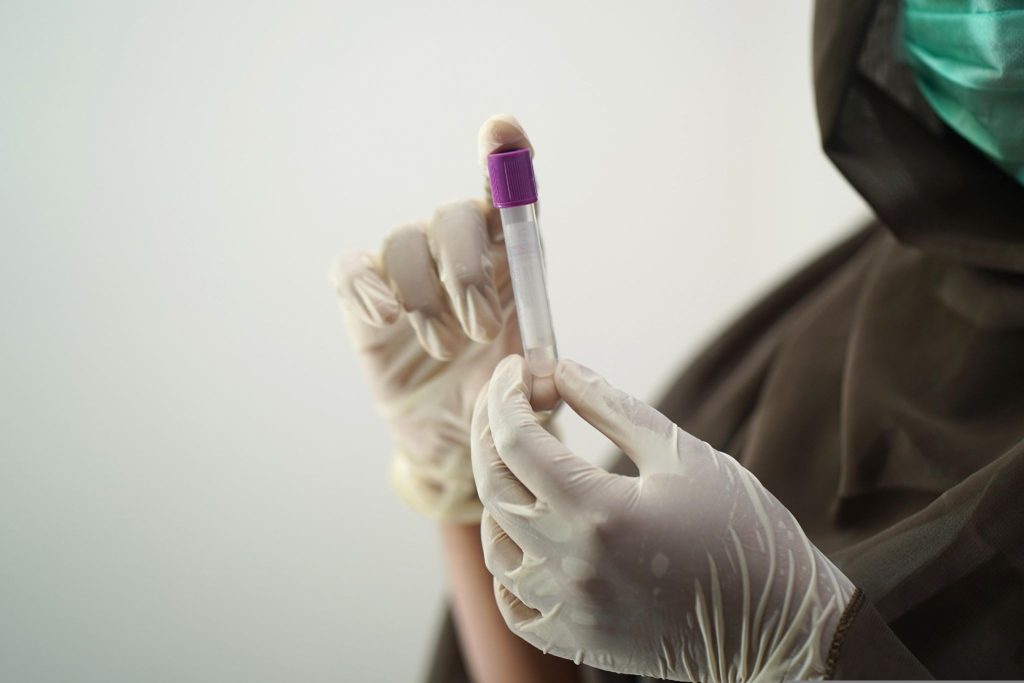
- Take a blood sample or tissue sample.
- Add a specific antibody that seeks out your target molecule.
- The antibody binds to the target.
- Then a detection system transforms that binding into a readable signal. A number. A color change. A light intensity.
ELISA is one of the most widely used detection techniques, relying on a sandwich immunoassay where two antibodies work together to capture and detect the target antigen.
Inflammation Detection Through Cytokine Measurement
Inflammation is chemistry. When your body responds to injury or infection, it produces signaling molecules called cytokines. Detect those cytokines, and you see the inflammation happening.
Multiplex analysis systems allow the simultaneous detection of 100 or more different biomolecules performed in a single microplate well. These cytokine antibody arrays can simultaneously detect multiple cytokine expressions in one assay at the protein levels in any body fluid, such as plasma, serum, cell lysates, cerebrospinal fluid, ascites, saliva or urine. These arrays have high sensitivity and can detect cytokine at the pg/ml concentrations.
The enzyme linked immunospot (ELISpot) assay uses antibodies to capture and detect analytes of interest that are released by immune cells, providing information about whether a patient is immunosuppressed and likely to respond to immune adjuvant therapy.
The Entire Detection Workflow
A complete detection workflow looks like this. Scientists identify a disease marker. They design an antibody to recognize it. They validate that the antibody works reliably. They use the monoclonal antibody production process to manufacture consistent, high-quality reagents. Then they integrate that antibody into a diagnostic test.
Monoclonal antibodies, characterized by high affinity and high specificity, have found extensive applications in basic research, medical diagnostics, and disease treatments. In diagnostics, they allow detection of pathogen antigens or disease-related biomarkers for early cancer screening, precise diagnosis, and rapid identification of infectious diseases.
Monoclonal antibodies are useful in diagnostic, imaging, and therapeutic purposes and have a very high clinical significance. Once hybridoma cells become stable, these cell lines offer limitless production of homogenized antibodies. The antibodies produced by this method are highly sensitive and specific to the targeted antigen.
Final Words
Understanding how antibodies detect disease requires understanding where they come from. The monoclonal antibody production process is the foundation of all modern disease detection.
Scientists use antibodies to detect disease because antibodies offer unmatched specificity, consistency, and sensitivity. For researchers and diagnosticians wanting to learn more about how monoclonal antibodies are developed and manufactured for these critical applications, explore the detailed processes and methods at AAA Biotech
Disease detection is a molecular conversation. Antibodies are the words that make that conversation possible.