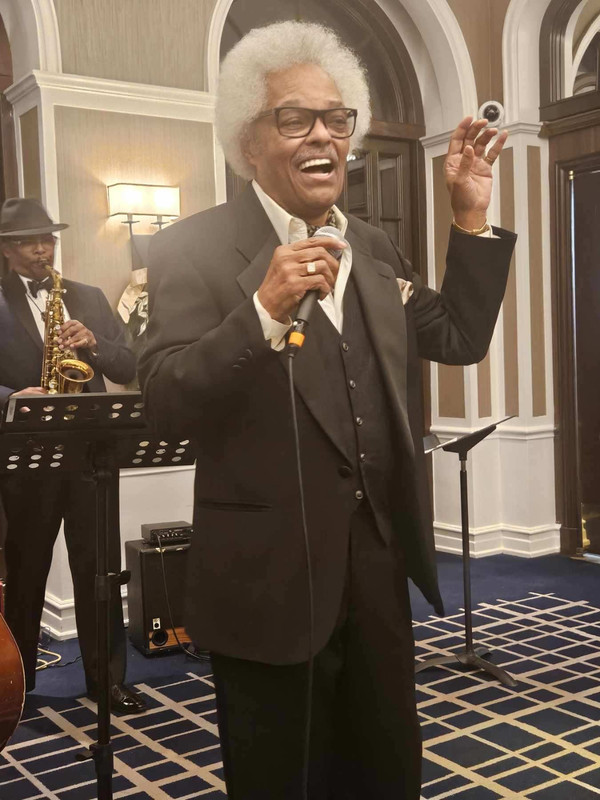
The Unconventional Archivist: How Public Access Television Became a Jazz Archive
In 1994, when JaRon K. Eames launched The JaRon Eames Show on Manhattan Neighborhood Network, he did so without the institutional backing that typically supports cultural preservation projects. There were no museum grants, no university endorsements, and no formal organizational structure behind him. What he had instead was a vision, a deep love for jazz and blues, and access to public-access television, a platform that would prove surprisingly effective for documenting one of America’s most important musical traditions.
The decision to use cable access television as an archival tool was both pragmatic and revolutionary. At a time when many cultural institutions were gatekeeping the preservation of jazz history, Eames recognized that public-access television offered something those institutions could not provide: immediacy and authenticity. The format allowed him to sit down with jazz legends in an informal setting, capturing their stories, their philosophies, and their memories without the filter of academic approval or curatorial oversight. This grassroots approach to cultural preservation has resulted in one of the most comprehensive video archives of jazz oral history in existence.
The first guest on The JaRon Eames Show set the tone for what would become decades of invaluable documentation. Charles Linton, the man who discovered Ella Fitzgerald and brought her to Chick Webb’s band, represented exactly the kind of living history that Eames sought to preserve. Linton’s connection to one of jazz’s most iconic figures made him a walking bridge between eras, and his appearance established the show’s commitment to featuring not just performers, but the individuals who shaped the infrastructure of jazz itself. The bookers, the bandleaders, the behind-the-scenes figures who made the music possible would all find a platform on Eames’s show.
Over the years, the roster of guests has read like a who’s who of jazz royalty. Nancy Wilson, whose sophisticated vocal style influenced generations of singers, sat across from Eames and shared insights about her craft. Little Jimmy Scott, with his distinctive contralto voice and emotionally devastating interpretations, opened up about his unique journey through the music business. Joe Williams, the Count Basie Orchestra’s legendary vocalist, brought his commanding presence and storytelling ability to the program. Oscar Peterson, one of the greatest pianists in jazz history, discussed his approach to the instrument and his philosophy of swing.
The show also featured instrumentalists who expanded the boundaries of jazz. Chuck Mangione brought his flugelhorn and his crossover appeal to the conversation. Clark Terry, the master trumpeter who mentored countless musicians, shared stories from his decades in the music. Randy Weston, the pianist and composer who explored African musical traditions and their connection to jazz, discussed the global dimensions of the art form. Each of these conversations added another layer to the archive Eames was building, creating a multidimensional portrait of jazz as a living, evolving tradition.
Building a Legacy One Conversation at a Time
What distinguishes The JaRon Eames Show from other jazz interview programs is its emphasis on depth over brevity. In an era increasingly dominated by sound bites and quick takes, Eames’s approach has been deliberately unhurried. His interviews allow subjects the time and space to develop their thoughts, to digress into revealing anecdotes, and to reflect on their life’s work with the perspective that only decades of experience can provide. This patience has yielded conversations that capture not just facts and dates, but the essence of what it means to dedicate a life to jazz.
The show’s longevity has also given it a unique perspective on the passage of time within the jazz community. Guests on the show were captured at crucial moments in their careers, providing snapshots of artists at the height of their powers or in reflective later years. Still others were documented just in time, their appearances on the show becoming some of the last recorded interviews before their passing. This temporal dimension adds immeasurable value to the archive, transforming it from a simple collection of interviews into a chronicle of jazz’s evolution across decades.
Eames’s background as a performer himself has profoundly shaped his approach as an interviewer. Unlike journalists or academics who come to jazz from the outside, Eames speaks the language of working musicians. He understands the challenges of finding the right accompanist, the delicate negotiations of bandstand dynamics, and the economic realities of sustaining a career in jazz. This insider knowledge allows him to ask questions that might not occur to other interviewers and to recognize the significance of details that others might overlook. His guests respond to this understanding, often opening up in ways they might not with someone less familiar with their world.
The show has also served a broader educational function, introducing younger viewers to artists they might not otherwise encounter. In an age when commercial radio has largely abandoned jazz programming, and when the music receives minimal exposure in mainstream media, The JaRon Eames Show has functioned as a vital connector between generations. Young musicians discovering the music can hear directly from the masters about their influences, their techniques, and their artistic philosophies. This direct transmission of knowledge, unmediated by textbooks or secondhand accounts, represents an invaluable educational resource.
From Cable Access to Cultural Institution
The transformation of The JaRon Eames Show from a modest cable access program to a significant cultural archive reflects broader changes in how we think about media preservation and cultural documentation. When Eames began the show in the mid-1990s, the internet was just beginning to emerge as a mass medium, and the idea that a public-access television program could have lasting archival value might have seemed far-fetched. Today, as streaming video has become ubiquitous and institutions scramble to digitize their holdings, Eames’s foresight in documenting these conversations appears prescient.
The show’s existence outside traditional institutional frameworks has proven to be both a challenge and an advantage. Without major funding, Eames has had to be resourceful, managing production logistics and distribution on limited budgets. However, this independence has also meant freedom from the constraints that institutional oversight might impose. There have been no committees deciding which artists are sufficiently important to merit documentation, no bureaucratic approval processes slowing down production, and no pressure to conform to predetermined narratives about what jazz history should look like.
Eames has also extended the show’s impact through other initiatives. His co-hosting of the first Billie Holiday Jazz Festival in Brooklyn, alongside Torrie McCartney, demonstrated his commitment to celebrating jazz in live settings as well as through documentation. That festival, featuring performances by Houston Person, Etta Jones, and Little Jimmy Scott, connected the archival work of the television show with the living tradition of performance. Similarly, his creation of ParlorJazz, an intimate live jazz series launched with pianist Ms. Emme Kemp, has provided venues for the kind of close-up musical experiences that harken back to earlier eras of jazz presentation.
The archive that Eames has created through The JaRon Eames Show represents more than just a collection of interviews. It is a testament to the power of individual initiative in cultural preservation, a demonstration that important historical documentation need not wait for institutional approval or major funding. The show has captured voices that might otherwise have been lost, preserved perspectives that enrich our understanding of jazz history, and created a resource that will serve researchers, musicians, and fans for generations to come. In choosing to emphasize immediate presence over formal authority, JaRon Eames has built something of lasting value, an archive that stands as both a historical record and an ongoing conversation with the jazz transition.