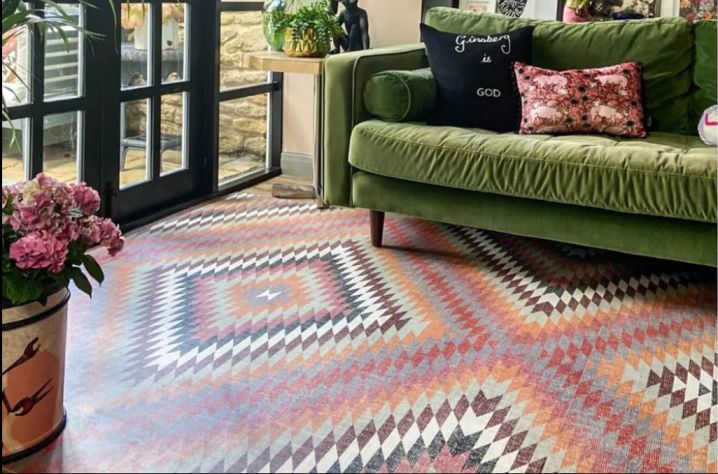

Decorating a small apartment often requires careful choices because every object affects how spacious or crowded a room feels. Rugs play a larger role than many people expect. A bold rug can define zones, introduce color, and create visual depth even when square footage is limited.
The key is understanding how scale, pattern, and furniture placement work together so that a strong design choice feels intentional rather than overwhelming.
In some design trend reports discussed by National Association of Home Builders, compact living continues to influence how people choose practical but expressive interiors, especially in urban homes.
Why Bold Rugs Work Surprisingly Well in Small Rooms
Many people assume small spaces need neutral flooring elements to avoid visual heaviness. In practice, a statement rug often gives a compact room more identity and structure.
A strong rug can:
- Anchor a seating area
- Separate functional zones in studio apartments
- Draw attention away from awkward room proportions
- Add warmth without adding furniture
A room with limited furniture sometimes looks unfinished without a strong floor element. A bold rug helps the room feel complete.
Choosing the Right Size Matters More Than Pattern
The biggest mistake in compact interiors is choosing a rug that is too small. A tiny rug often makes the room feel disconnected.
A better approach is selecting a rug large enough so that:
- Front legs of the sofa sit on it
- The bed extends partly over it
- A dining table remains fully supported when chairs move
A larger rug often creates the illusion of a wider room because it visually unifies the area.
Patterns That Add Depth Instead of Clutter
Not every bold design works equally well in small apartments. Pattern direction influences how the eye reads space.
Good options include:
- Geometric lines that stretch the room visually
- Large abstract shapes
- Repeated motifs with balanced spacing
- Soft contrast rather than chaotic detail
Busy patterns with many tiny elements may feel crowded if the surrounding furniture is already detailed.
Color Balance Is Essential
A statement rug does not need to introduce many colors. Sometimes one dominant tone with two supporting shades creates stronger impact than a highly mixed palette.
For example:
- Deep blue with cream accents
- Rust tones with muted beige
- Green with soft charcoal
When the rug is bold, nearby furniture usually works best in calmer shades so the floor remains the visual focal point.
Furniture Placement Should Support the Rug
A rug should feel connected to the furniture rather than placed underneath as an afterthought.
Living Room
Keep at least the front furniture legs on the rug. This creates a single visual zone.
Bedroom
Place the rug under the lower two-thirds of the bed so it extends outward on both sides.
Dining Corner
Ensure chairs remain on the rug even when pulled back.
This balance prevents the rug from looking disconnected.
Layering Can Add Character in Compact Interiors
Layering rugs is useful when the base floor needs softness but a bold top layer adds personality.
A neutral base rug can support:
- A patterned accent rug
- A smaller vintage-style piece
- A textured woven layer
This works especially well in rental apartments where flooring cannot be changed.
Material Choice Affects Visual Weight
Thick rugs feel cozy but may visually crowd very tight rooms.
Low-pile options usually work better because they:
- Keep edges clean
- Make furniture sit more naturally
- Are easier to clean in daily use
This is especially useful in apartments where one room serves several purposes.
Keep Surrounding Decor Controlled
A strong rug should not compete with too many bold accessories.
It helps to simplify:
- Cushion patterns
- Wall art density
- Decorative objects
The room still feels expressive because the floor already carries strong design energy.
An Unexpected Contrast in Styling Choices
Interior design trends often overlap across lifestyle categories. Just as people simplify skincare choices when choosing clean beauty products, apartment styling also benefits from limiting unnecessary layers and keeping standout pieces intentional.
A single strong rug often has more effect than many small decorative additions.
Final Thought
A bold rug can transform a compact apartment when size, color, and placement are chosen carefully.
Instead of making a room feel smaller, the right statement rug often gives the space clearer identity, stronger balance, and a more finished atmosphere.
Frequently Asked Questions
Not necessarily. A well-sized bold rug often makes a room feel more structured and visually larger because it connects furniture and creates one clear design zone.
A rug large enough to fit at least the front legs of the sofa and nearby chairs usually works best. Very small rugs often make the space feel fragmented.
Yes, especially medium or darker patterns, because they help hide dust, small stains, and daily wear better than very light plain rugs.