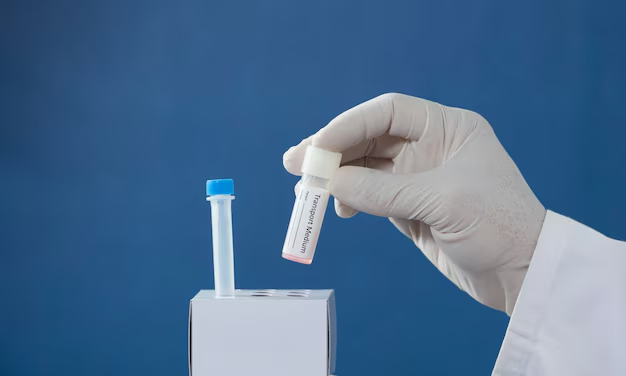
Molecular biology has transformed the way researchers detect diseases, study genetic material, and analyze biological samples. Among the most important technologies driving these advances is Polymerase Chain Reaction (PCR), a laboratory technique used to amplify specific DNA sequences for detailed analysis. From infectious disease detection to genetic research, PCR continues to play a major role in healthcare, biotechnology, and pharmaceutical development.
As laboratories demand faster and more accurate molecular testing methods, the use of Polymerase Chain Reaction Kit solutions has increased significantly across research and diagnostic settings. PCR kits provide scientists with the reagents, enzymes, buffers, and protocols needed to efficiently and reproducibly amplify DNA or RNA targets.
What Is a Polymerase Chain Reaction Kit?
A Polymerase Chain Reaction kit contains the essential components required to perform PCR amplification in a laboratory environment. PCR technology works by copying a targeted region of DNA through repeated heating and cooling cycles. This amplification process allows researchers to detect even very small amounts of genetic material within a sample.
Most PCR kits typically include:
- DNA polymerase enzyme
- Reaction buffers
- dNTPs (nucleotides)
- Primers or primer guidelines
- Positive and negative controls
- Detection reagents
- Detailed testing protocols
Researchers on laboratory forums often explain that commercial PCR kits simplify workflows by combining optimized reagents into ready-to-use systems that improve consistency and reduce preparation errors.
How PCR Technology Works
PCR amplification occurs through a series of temperature-controlled steps inside a thermal cycler.
Denaturation
The DNA sample is heated to separate the double-stranded DNA into single strands.
Annealing
Primers attach to specific target regions on the DNA strands.
Extension
DNA polymerase synthesizes new DNA strands by adding nucleotides to the primers.
These steps repeat through multiple cycles, creating millions of copies of the target DNA sequence. This amplification allows researchers to identify pathogens, mutations, or genetic markers with exceptional sensitivity.
Common Applications of PCR Kits
PCR kits are widely used across various scientific and medical disciplines because of their speed, precision, and versatility.
Infectious Disease Detection
PCR testing is commonly used to detect viral, bacterial, and fungal pathogens. During the COVID-19 pandemic, PCR assays became one of the most important diagnostic tools worldwide. MyBioSource highlights that PCR kits are frequently used for SARS-CoV-2 and infectious disease research applications.
Genetic Research
Scientists use PCR kits to study genes, mutations, and inherited conditions. Amplification technology allows researchers to analyze DNA samples in detail even when only small amounts of genetic material are available.
Oncology Research
Cancer researchers rely on PCR methods to study tumor mutations, gene expression patterns, and biomarkers associated with disease progression.
Food and Environmental Testing
PCR assays are also valuable in food safety and environmental monitoring because they can rapidly identify microbial contamination and harmful organisms.
Veterinary and Agricultural Applications
PCR technology is widely used in veterinary diagnostics and agricultural research to detect pathogens in livestock and crops. Researchers discussing PCR workflows online often mention the technology’s importance in animal disease testing.
Benefits of Using PCR Kits
PCR technology offers several advantages that make it one of the most trusted molecular testing methods in modern laboratories.
High Sensitivity
PCR can detect extremely low concentrations of DNA or RNA, making it suitable for early disease detection and low-abundance target analysis.
Rapid Results
Compared to many traditional microbiological methods, PCR assays provide faster turnaround times, helping laboratories improve workflow efficiency.
Strong Specificity
Well-designed primers allow PCR assays to target highly specific genetic sequences, reducing the risk of inaccurate detection.
Scalable Testing
PCR workflows can support both small-scale experiments and high-throughput laboratory testing environments.
User-Friendly Commercial Kits
Many laboratories prefer ready-made PCR kits because they simplify reagent preparation and improve consistency between experiments. Researchers frequently note that commercial kits provide clear protocols that are especially useful for beginners and students.
Factors to Consider When Choosing a PCR Kit
Selecting the correct PCR kit is essential for obtaining accurate and reproducible results.
Target Compatibility
Researchers should confirm that the kit is validated for the exact pathogen, gene, or biomarker being studied.
Sample Type
Different PCR kits are designed for various sample matrices, including blood, saliva, tissue samples, environmental samples, and cultured cells.
Sensitivity and Detection Range
Detection limits vary between assays, so laboratories should review product specifications carefully before purchasing.
Workflow Requirements
Some PCR kits are designed for conventional PCR, while others support real-time PCR (qPCR) or multiplex PCR workflows.
Technical Support and Documentation
Reliable product documentation and technical assistance can help laboratories troubleshoot issues and optimize assay performance more effectively.
Final Thoughts
Polymerase Chain Reaction kits continue to play a critical role in modern molecular biology by enabling accurate DNA amplification, disease detection, and genetic analysis. From infectious disease diagnostics to cancer research and biotechnology development, PCR technology supports some of the most important advances in modern science.
As laboratories continue adopting faster and more sensitive molecular testing solutions, reliable PCR kits remain essential tools for researchers seeking accurate, reproducible, and efficient experimental results.