
There is a specific dissatisfaction that comes with investing in an outdoor recreational space and then watching it sit vacant because the sun is too harsh, the wind has kicked up, or rain has arrived without much notice. Most outdoor constructions are constructed around ideal conditions rather than real ones. A solid patio roof eliminates the rain problem but produces a heat trap in summer. An open pergola looks wonderful until it becomes actually useless for months at a stretch. Homeowners continued renovating – shade sails, outside blinds, and portable heaters pulled out and packed away – trying to compensate for what the original structure could not provide. A louvred pergola system is what that retrofitting is truly striving for, done right from the outset.
Fixed Structures Have a Fundamental Flaw
The core problem with most permanent outdoor structures is that they make a single decision on behalf of the homeowner and then stick with it regardless of conditions. A solid roof says the priority is shelter. An open frame says the priority is light and airflow. Neither can change its mind. What this means in practice is that a beautifully constructed patio becomes a dim, stuffy box on a warm day or that a timber pergola dripping with climbing plants is entirely useless the moment an afternoon storm rolls in. The structure wins. The conditions win. The homeowner retreats indoors and wonders why the outdoor space does not get used as much as planned.
What the Louvre Blade Actually Does
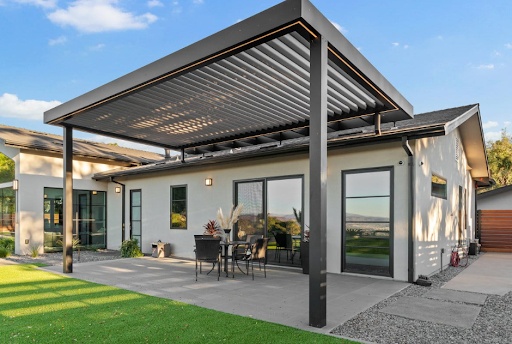
The intelligence of the system is in how little drama is involved. Aluminium blades rotate on a fixed axis within the frame – open, they allow full light and airflow; angled, they cut glare without closing the space off; shut completely, they lock out rain and wind with a weatherproof seal that does not require tarps or scrambling to cover furniture. A louvred pergola system with motorised operation and a rain sensor closes itself before most homeowners have even noticed the weather has changed. That responsiveness is the thing fixed structures can never offer, and it is the reason outdoor spaces built around adjustable louvres actually get used rather than avoided.
The Hospitality Industry Figured This Out First
Restaurants and bars with outdoor seating were early adopters of louvred roofing, and the reason is straightforwardly commercial. An outdoor dining area that closes against rain and opens on a clear evening generates revenue across conditions that would otherwise empty the tables. Residential homeowners are arriving at the same logic, just from a different direction. The outdoor entertaining area that functions well in January and in July, in the early morning and after dark with heating strips running through the frame, is a fundamentally different asset to one that works only when conditions are cooperative. The louvred pergola model transferred from commercial to residential because the underlying problem is identical — weather is unpredictable, and fixed structures cannot adapt to it.
Integration Changes What Is Possible
A pergola that only provides a roof is missing most of its potential. Modern louvred systems are designed with integration in mind — LED lighting recessed into the frame, infrared heating panels that run along the beams, and retractable side screens that manage wind and insects without enclosing the space entirely. This combination produces something that functions as a genuine outdoor room rather than a covered patio. Evening use in autumn becomes realistic with heating. Insects stop being a reason to go inside during summer. The space works across the full day rather than just during the narrow window when conditions happen to align.
Why Aluminium Is the Honest Choice
Timber has warmth and character that aluminium cannot replicate, and on certain properties the aesthetic argument for it is legitimate. But a structure with moving mechanical parts — blades that open and close daily across years of use — needs to be built from a material that does not warp, swell, or degrade under repeated exposure to moisture and temperature change. Powder-coated aluminium handles those conditions without maintenance. Timber does not, and a louvred timber system that starts binding or warping after a few seasons defeats the entire purpose.
Conclusion
A louvred pergola system does not just improve an outdoor space – it fundamentally changes how that space gets used throughout the year. The ability to respond to actual conditions rather than fixed ones means fewer retreats indoors, more consistent use through every season, and an outdoor area that genuinely justifies the investment made in it. For homeowners tired of working around what their outdoor structure cannot do, adjustable louvres are the answer that replaces the workaround entirely.